stratos | militärwissenschaftliche Zeitschrift der Schweizer Armee
Neuste Artikel

stratos | Wohlstand und Sicherheit: Armee zerstörte ihr Vertrauen – Eine kurze Geschichte des Verhältnisses der Sozialdemokratie zur Armee
Ein erster Schritt zur politischen Annäherung an die militärische Landesverteidigung bestand immer in der Frage nach deren Kosten. Die rein finanziellen Aspekte von Streitkräften sind jedoch nur die eine Seite der Medaille. Eine viel tiefer greifende und schwierigere Analyse zur Armee und Landesverteidigungskonzeption zielt auf die Vertrauensfrage. In der Rhetorik der bürgerlichen Armeeverteidigung wird die Ausgabenskepsis reflexartig der Linken und dem Pazifismus unterschoben. Doch die Vertrauensdefizite der Armee sind komplexer und historisch in einer langen Periode einzuordnen.

stratos | Jenseits des stochastischen Nebels: Neurosymbolische KI und die Überwindung kognitiver Limitierungen in militärischen Führungsprozessen
Militär ohne KI ist nicht mehr denkbar. Diese Tatsache bringt eine Reihe von Konsequenzen mit sich, deren Tragweite sich auf absehbare Zeit eher stärker als schwächer auf die militärische Praxis auswirken wird.

stratos | Les Principes de Nuremberg
Cette brève contribution apporte des éclaircissements sur le contexte historique des procès de Nuremberg. Elle examine leurs antécédents (en particulier les efforts déployés après la Première Guerre mondiale lors des procès de Leipzig), analyse les développements qui ont suivi la Seconde Guerre mondiale, et passe en revue les événements ultérieurs, tels que les efforts de codification du droit pénal international menés par la Commission du droit international des Nations Unies, la création de tribunaux pénaux internationaux, notamment pour l’ex-Yougoslavie et le Rwanda et la mise en place de la Cour pénale internationale. Enfin, elle aborde les défis géopolitiques actuels. L’héritage de Nuremberg repose sur trois éléments qui n’avaient jamais été réunis auparavant : la responsabilité individuelle, les infractions définies au niveau international et les procès devant un tribunal pénal international.
stratos | 1-26
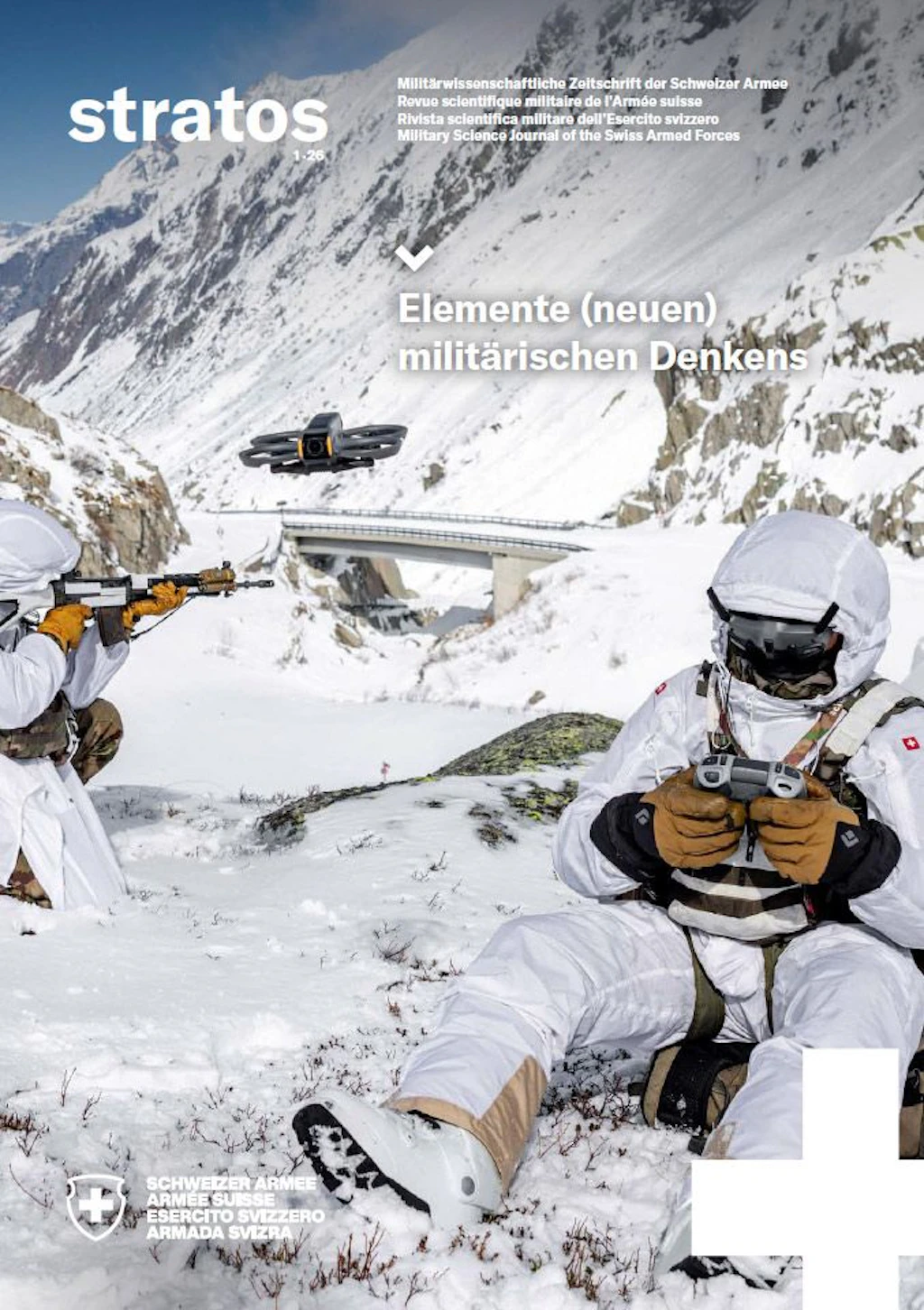
Compilatio zu stratos 1/26
Sammlung aller veröffentlichten Zeitschriften und Artikel
DE | Die Zeitschrift erscheint zweimal pro Jahr als Printausgabe. Auf der digitalen Plattform werden unter dem Label «stratos digital» zusätzlich kontinuierlich Artikel publiziert. Die Zeitschrift ist mehrsprachig, das heisst, jeder Artikel wird in seiner Originalsprache abgedruckt.
FR | Le magazine est publié deux fois par an sous forme imprimée. Sur la plateforme numérique, stratos publie régulièrement des articles sous le label "stratos digital". Le magazine est multilingue, ce qui signifie que chaque article est imprimé dans sa langue d'origine.
IT | La rivista viene pubblicata due volte all'anno in forma cartacea, mentre sulla piattaforma digitale, sotto l'etichetta "stratos digital", pubblica articoli in modo continuato. La rivista è multilingue, per cui ogni articolo viene stampato nella lingua originale.
EN | The magazine is published twice a year as a print edition. Articles are also continuously published on the digital platform under the label «stratos digital». The magazine is multilingual, meaning that each article is printed in its original language.