
Survey «Women – Skills – Armed Forces»

Results of the survey "Knowledge and skills that women gained in the military service / military peacekeeping service".
In summer 2022, the Specialised Office for Women in the Armed Forces and Diversity launched a questionnaire to identify the knowledge and skills that women acquire in military service and/or in military peacekeeping service that are also useful in civilian life. The trilingual online questionnaire contained nine questions, including open-ended questions, and the survey period was from 11 July to 30 September 2022. The study, including a link to the questionnaire, was announced on the WiAD website and via the Armed Forces' official Instagram channels. The link to the questionnaire was also shared via other Instagram accounts of military-related associations and by members of the Armed Forces with other acquaintances (snowball principle).
The questionnaire was addressed to Swiss women who had done military service or military peacekeeping service. A total of 164 women aged between 18 and over 60 took part in the study, divided into the various military rank categories from private to colonel.
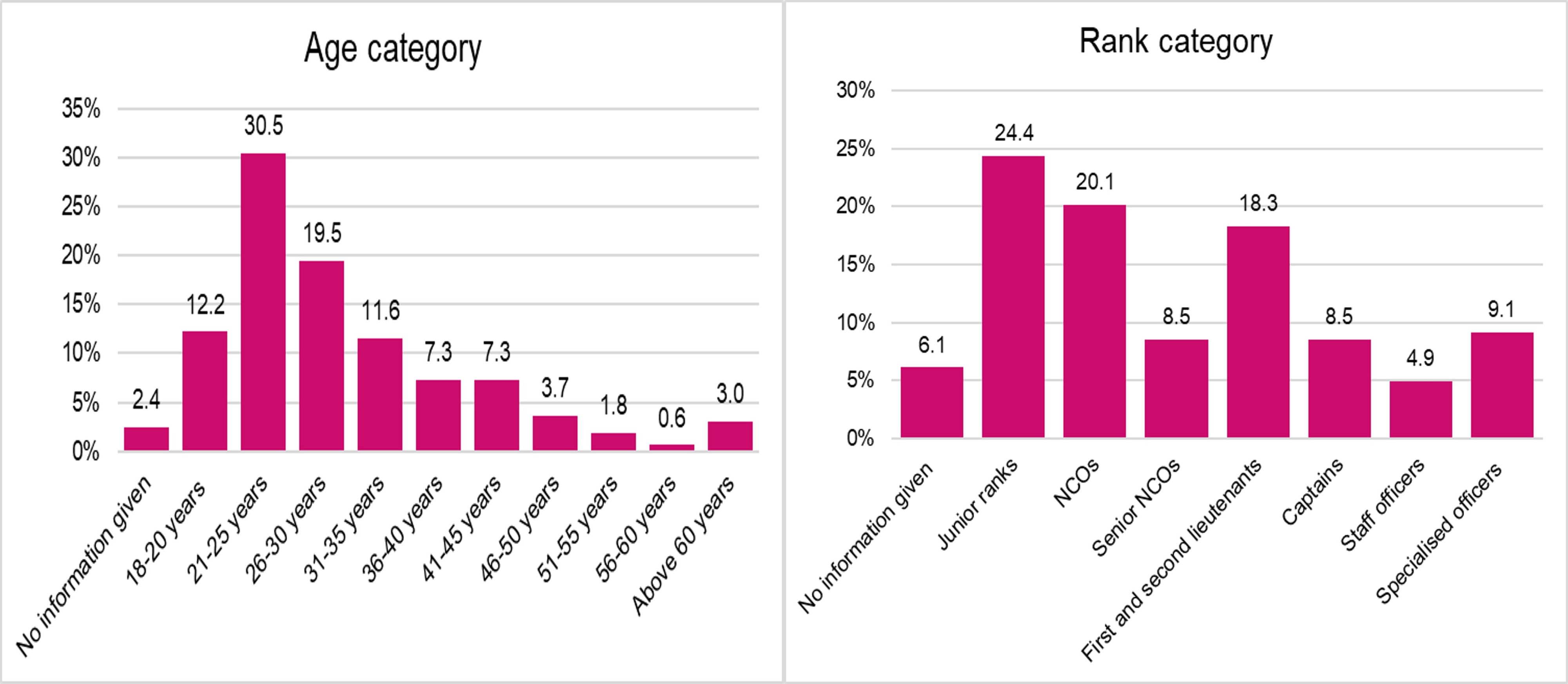
Figure 1 shows the age and rank distribution of the participants.
The following are the most important results of the study. It should be noted that the results cannot be generalised due to the type of survey (snowball sampling and self-selection) and the limited number of participants.
Main results
1. Knowledge acquired in military service/military peacekeeping service
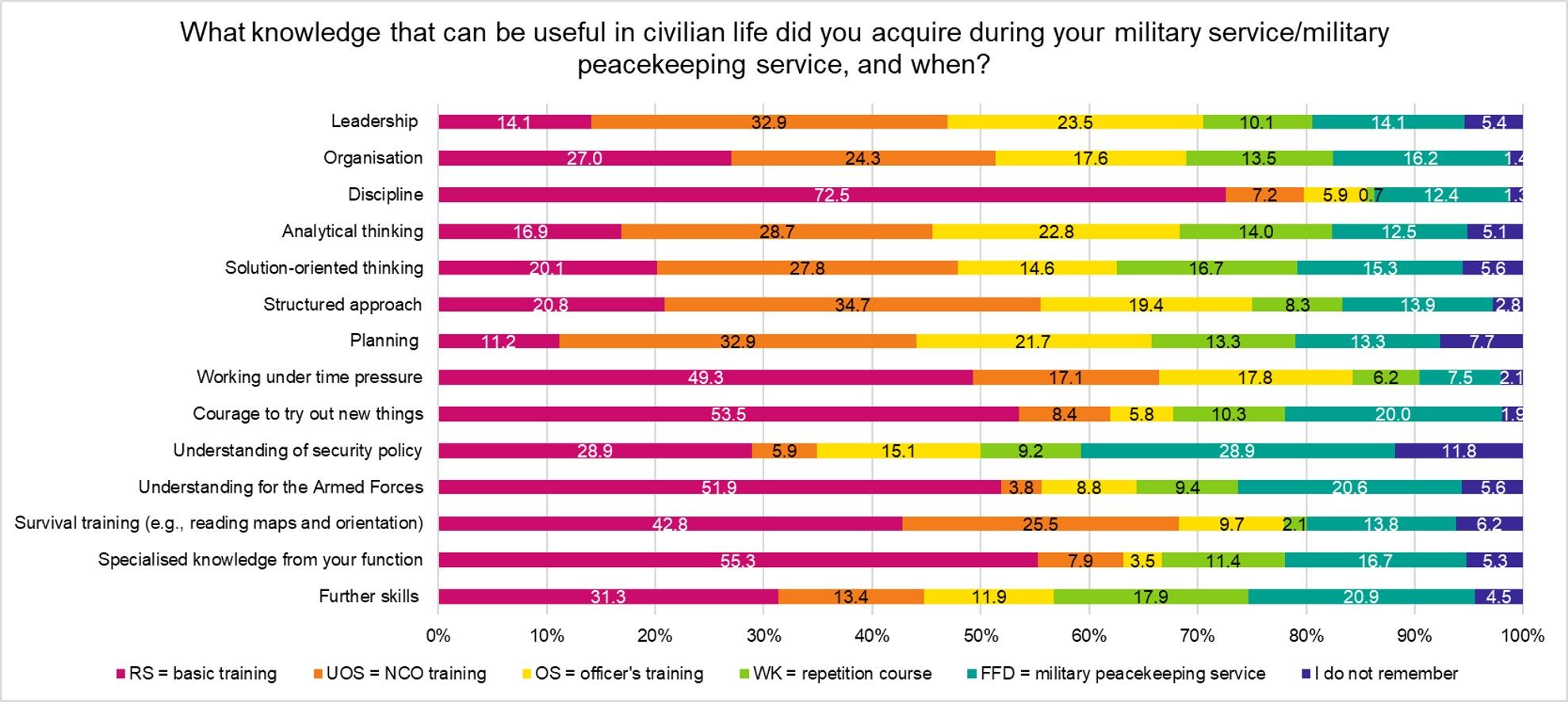
During basic military training, the first step in military life, many experiences are had and skills acquired that can also be useful in civilian life, for example, discipline, courage, trying out new things, working under time pressure, understanding of the Armed Forces and survival training. Certain skills are primarily acquired in leadership training programmes, such as leadership itself, analytical thinking, structured approaches, and planning ability (see Figure 2).
2. Personal changes or development during military/peacekeeping service
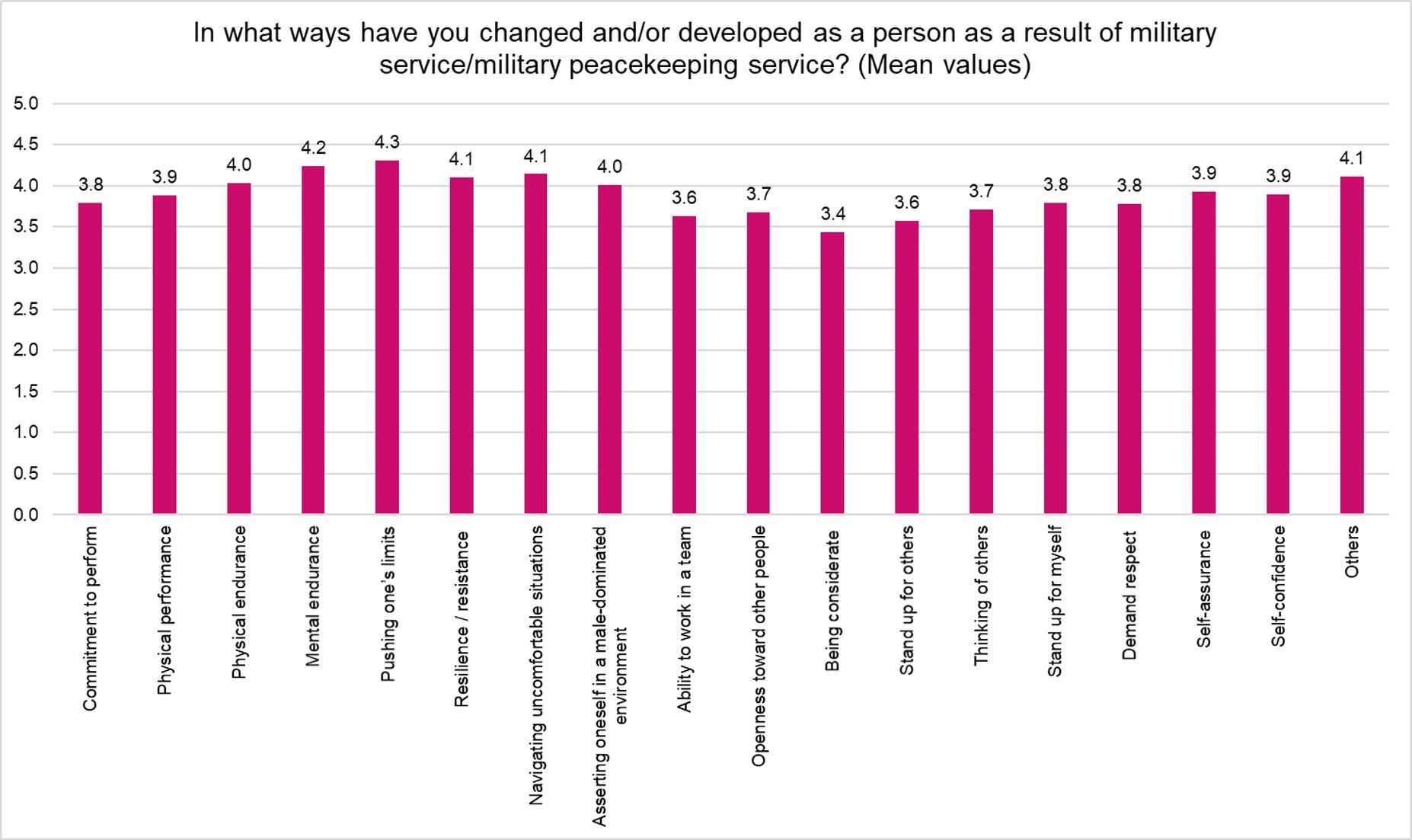
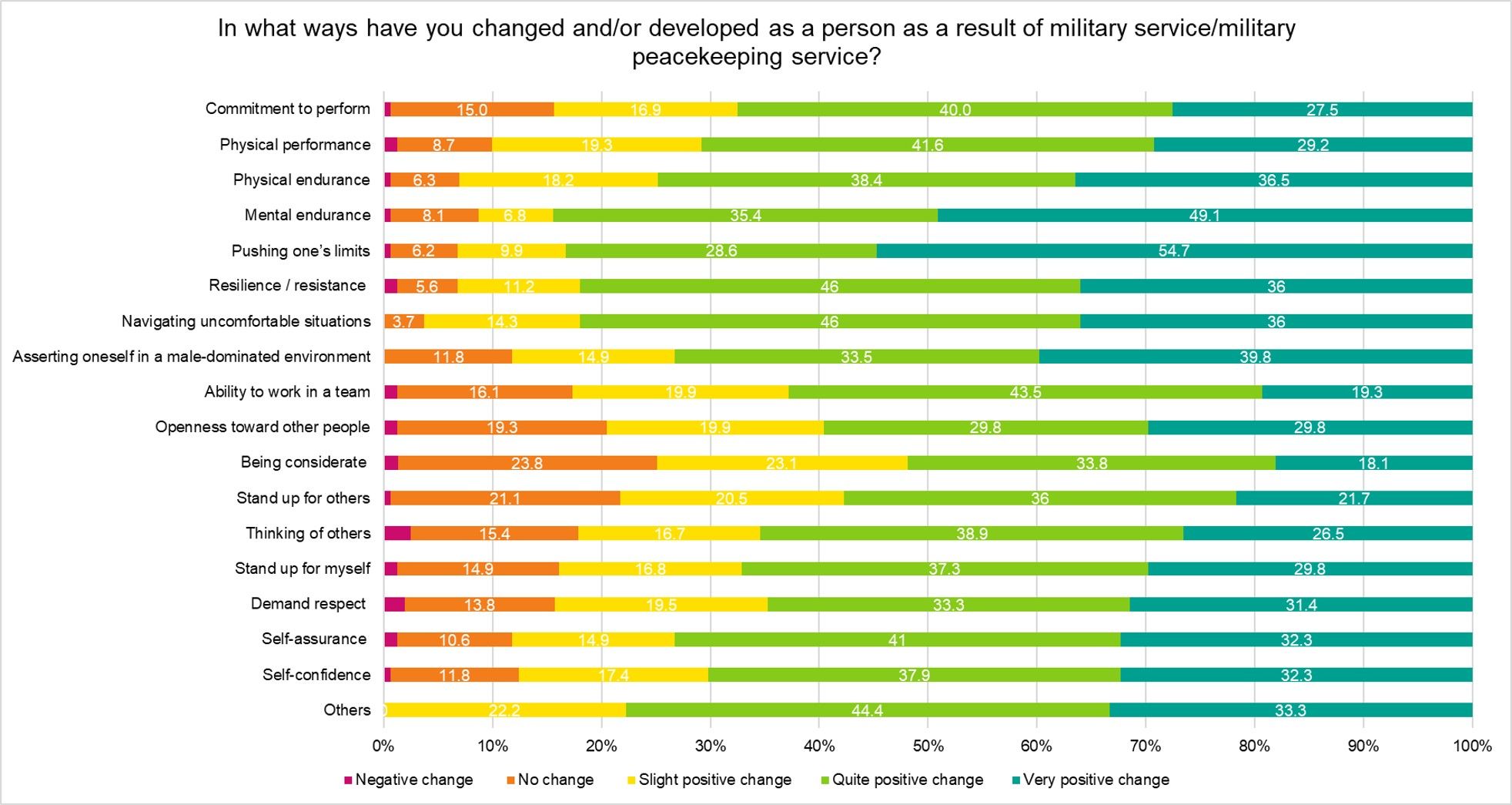
When looking at the mean values of the characteristics or competencies in which the study participants have changed or developed, a fairly homogeneous positive change can be seen throughout (see Figure 3). However, on closer inspection, differences between the various degrees of change become apparent. To a small extent, negative changes can also be observed (see Figure 4).
3. Other positive aspects
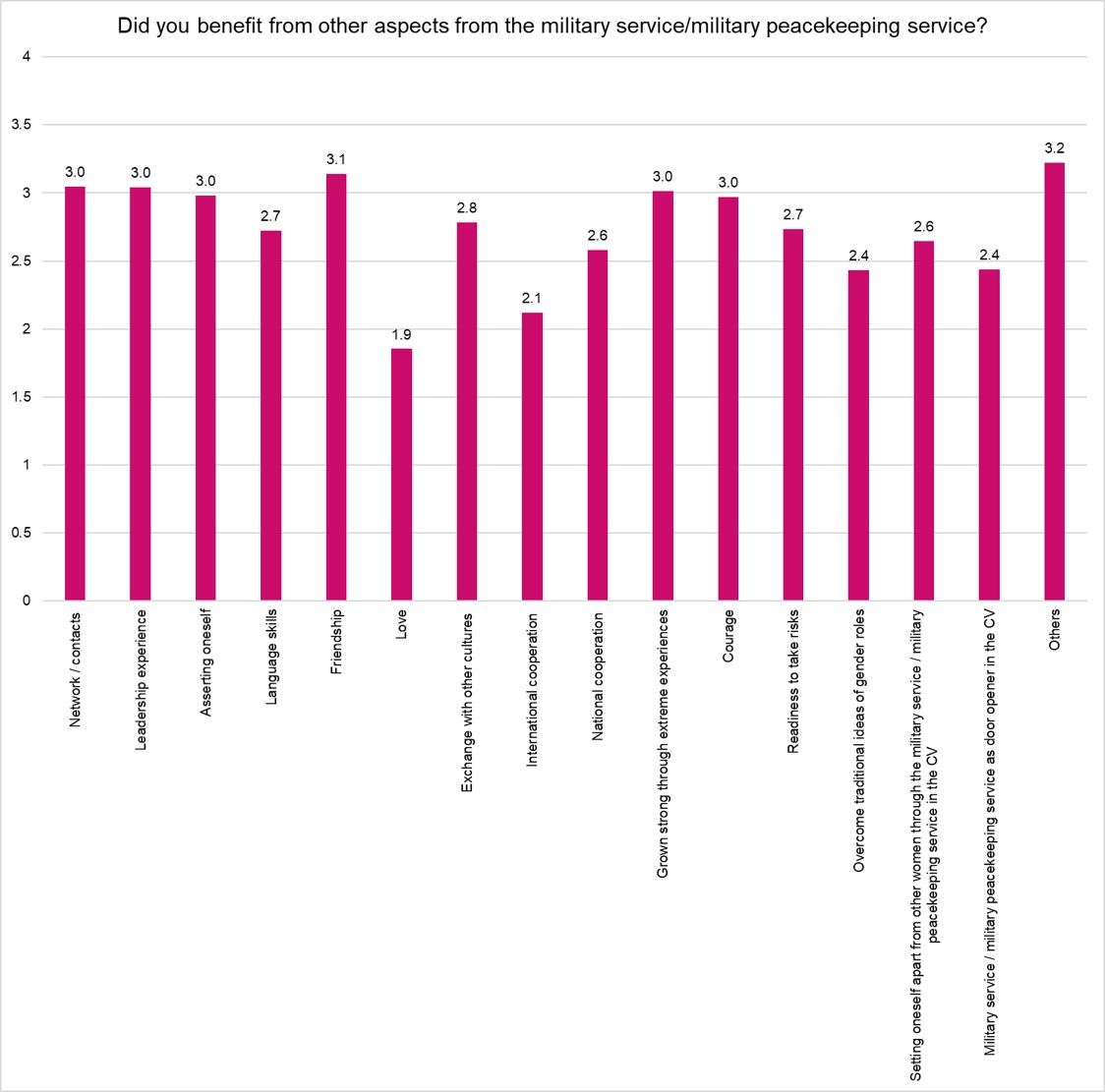
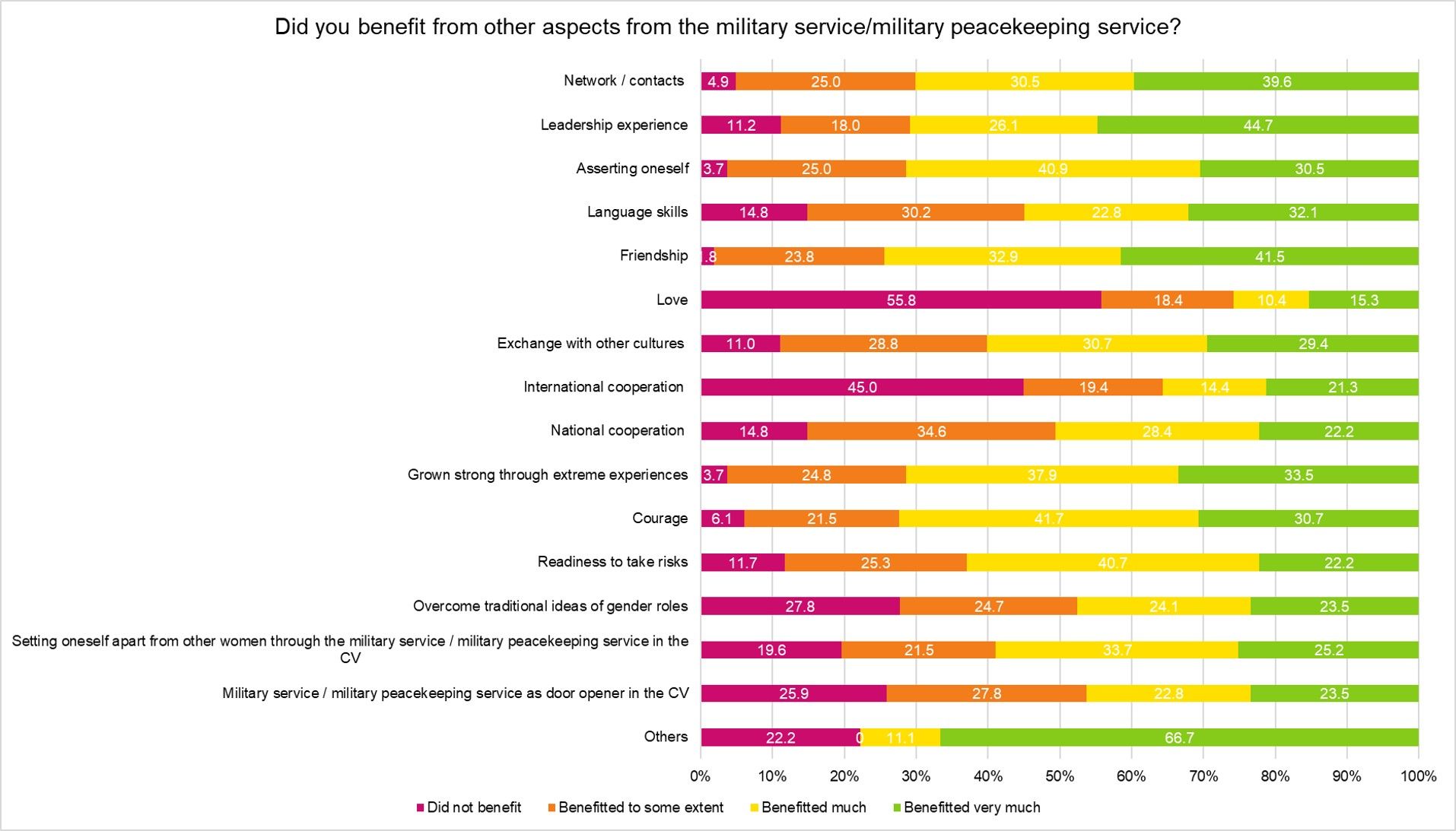
The other aspects from which the participants were able to benefit during their military service/military peacekeeping service show differences in the mean values. These are always in the range between 2 (partly benefited) and 3 (benefited a lot) on a scale of 1 to 4 (did not benefit; benefited a lot) (see Figure 5). Here, too, a closer look at the distribution shows that the aspects were rated very differently (see Figure 6).
4. Impact of military service/military peacekeeping service on civilian education, occupation or career
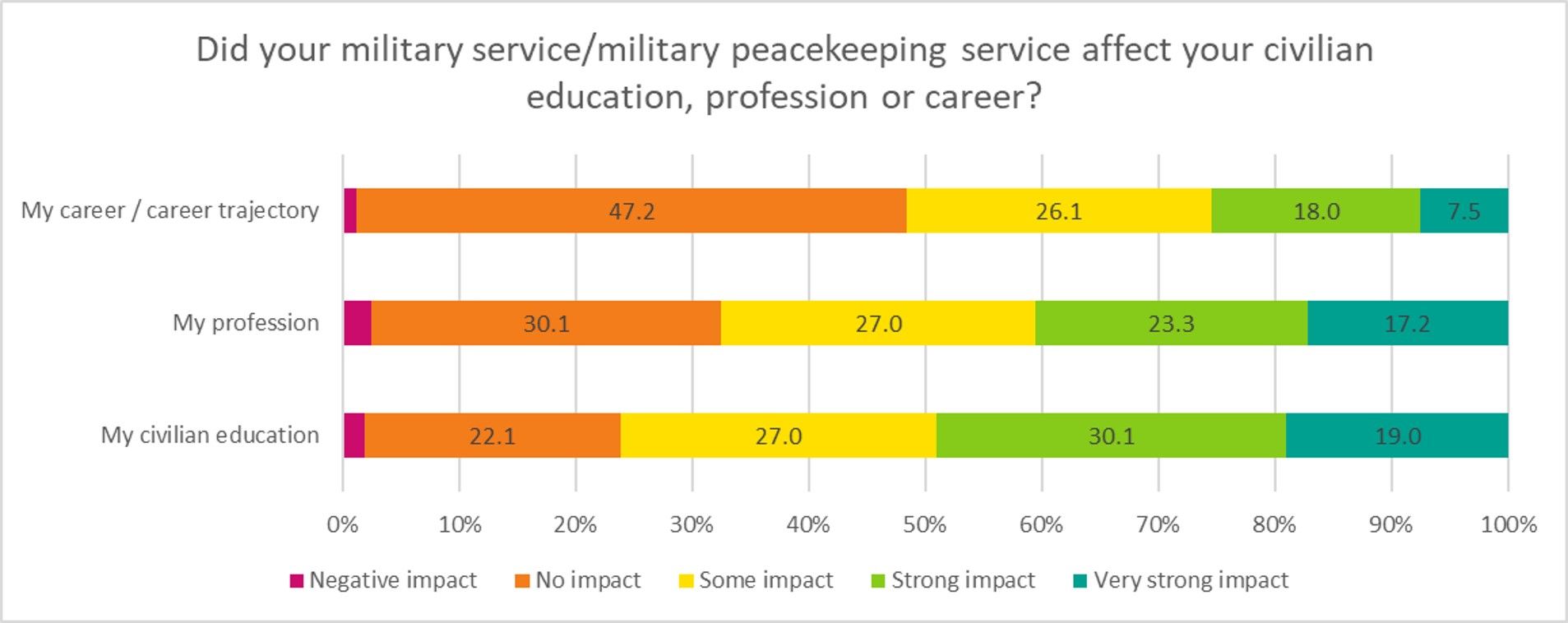
Military service/military peacekeeping service is somewhat related to three aspects of the participants' civilian life. As Figure 7 shows, this relationship is similar for all three areas, although it is less pronounced for civilian education than for the other two areas.
For the majority of participants, education, work and career all have at least a slightly positive influence. Looking at work and career, this result is even more positive, with more than two-thirds of participants reporting a positive effect.
Documents
Survey women skills Armed Forces (available in German, French and Italian):
Contact
Specialised Service for Women in the Armed Forces and Diversity (WiAD)
Swiss Armed Forces
Training and Education Command
Papiermühlestrasse 14
CH - 3003 Berne
Monday – Friday: 8 a.m. - 5 p.m.
Telephone: +41 58 480 50 00
E-Mail: contact.fiad@vtg.admin.ch
In urgent cases