Published on 14 November 2025

Peacekeeping missions
The Swiss Armed Forces actively engages in peacekeeping around the world. Currently there are over a dozen missions in Europe, Africa and Asia. The men and women who volunteer for the various peacekeeping missions as members of the Swiss Armed Forces carry out assignments depending on the mission type and the area of engagement.

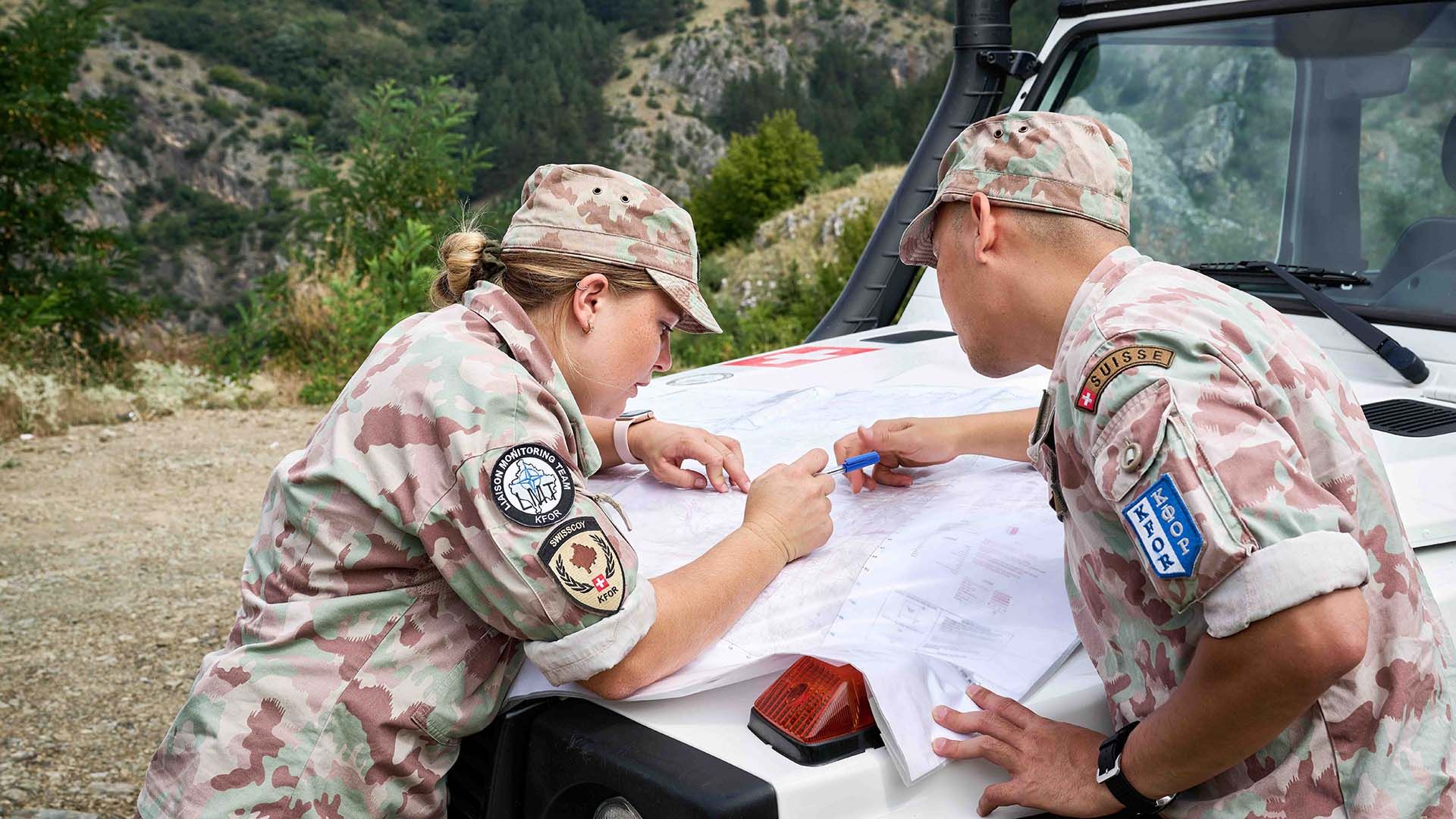
SWISSCOY’s mission in Kosovo is the largest of the Swiss Armed Forces’ peacekeeping operations to date. Since 1999, up to 215 soldiers have been deployed per contingent in support of NATO’s Kosovo Force (KFOR). These men and women support the KFOR in its mission to ensure a safe and secure environment and to maintain freedom of movement for everyone in Kosovo. SWISSCOY soldiers have a wide range of tasks and functions, including work­ing in liaison and monitoring teams, in the engineer branch or as staff officers in the regional commands or at KFOR HQ. SWISSCOY also provides health­care services, logistics support for road and air transport as well as support for the military police and explosive ordnance disposal team.

14 November 2025

SWISSCOY KFOR

SWISSCOY’s mission in Kosovo is the largest of the Swiss Armed Forces’ peacekeeping operations to date. Since 1999, up to 215 soldiers have been deployed per contingent in support of NATO’s Kosovo Force (KFOR). These men and women support the KFOR in its mission to ensure a safe and secure environment and to maintain freedom of movement for everyone in Kosovo. SWISSCOY soldiers have a wide range of tasks and functions, including work­ing in liaison and monitoring teams, in the engineer branch or as staff officers in the regional commands or at KFOR HQ. SWISSCOY also provides health­care services, logistics support for road and air transport as well as support for the military police and explosive ordnance disposal team.

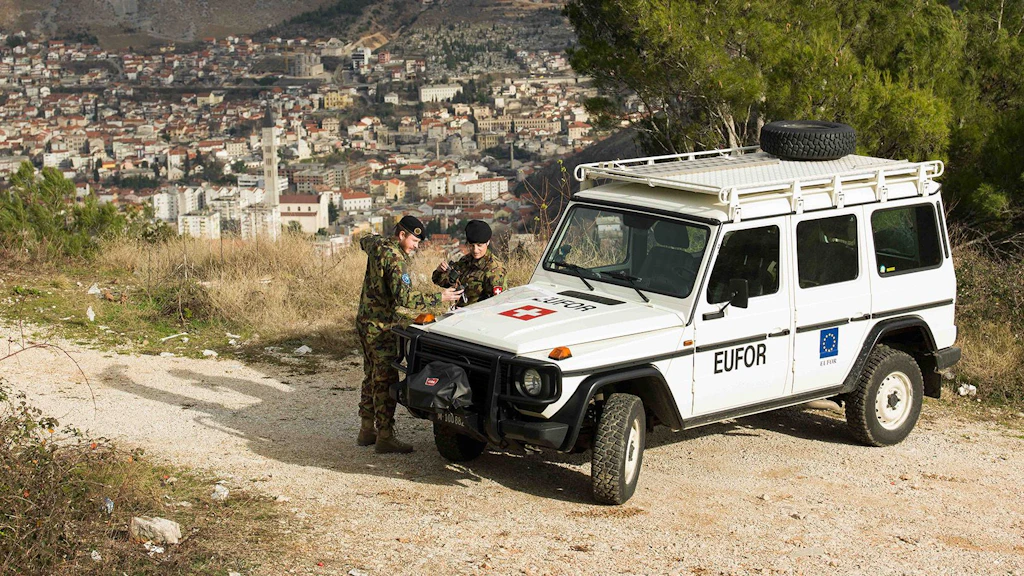
Since 2004, up to 20 members of the Swiss Armed Forces have supported the EUFOR ALTHEA mission in Bosnia and Herzegovina in liaison and observation teams (LOT). They are stationed at well-known or potential hot spots and work in close collaboration with the local population, local authorities and international organisations working in the same region. The teams gather and pass on information to EUFOR headquarters for the purpose of assessing the nationwide security situation  and compiling threat assessments. As part of the mission, a mobile training team of up to six Swiss small arms and ammu­nition specialists are training the armed forces of Bosnia and Herzegovina in the field of ammunition and weapons management.
14 November 2025

EUFOR ALTHEA

Since 2004, up to 20 members of the Swiss Armed Forces have supported the EUFOR ALTHEA mission in Bosnia and Herzegovina in liaison and observation teams (LOT). They are stationed at well-known or potential hot spots and work in close collaboration with the local population, local authorities and international organisations working in the same region. The teams gather and pass on information to EUFOR headquarters for the purpose of assessing the nationwide security situation  and compiling threat assessments.

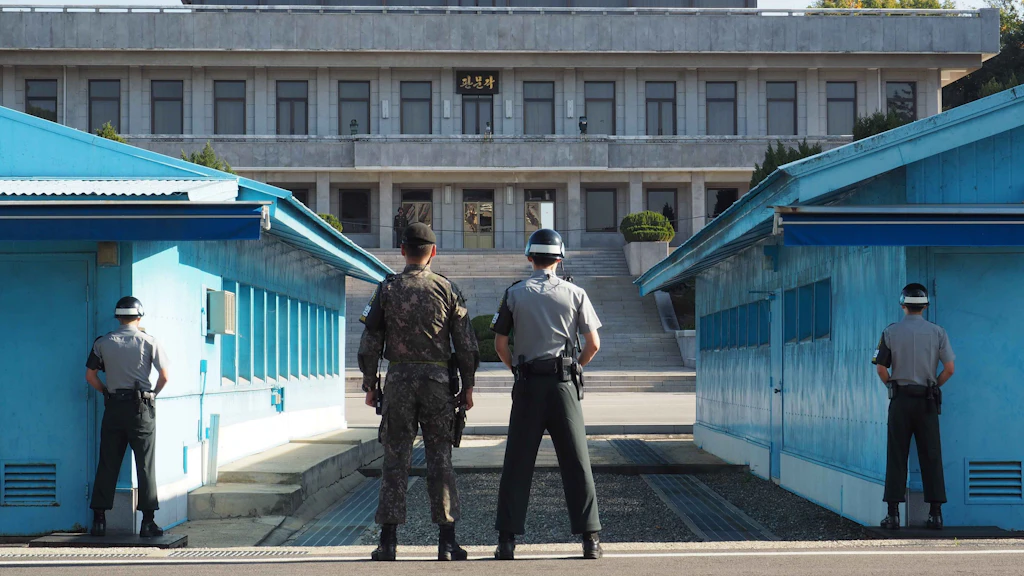
The Neutral Nations Supervisory Commission (NNSC) is the longest running Swiss Armed Forces peacekeeping mission. In 1953, the Federal Council resolved to send approximately 150 Swiss Armed Forces members to Korea. Today five Swiss officers and five Swedish officers are stationed south of the military demarcation line in Panmunjeom. The main duty of the NNSC is to monitor the armistice agreement, which was signed in 1953. This includes inspection of observation and guard posts as well as weapon positions, or the observation of military exercises in the south, and special investigations into suspected ceasefire violations.
14 November 2025

NNSC

The Neutral Nations Supervisory Commission (NNSC) is the longest running Swiss Armed Forces peacekeeping mission. In 1953, the Federal Council resolved to send approximately 150 Swiss Armed Forces members to Korea. Today five Swiss officers and five Swedish officers are stationed south of the military demarcation line in Panmunjeom. The main duty of the NNSC is to monitor the armistice agreement, which was signed in 1953. This includes inspection of observation and guard posts as well as weapon positions, or the observation of military exercises in the south, and special investigations into suspected ceasefire violations.

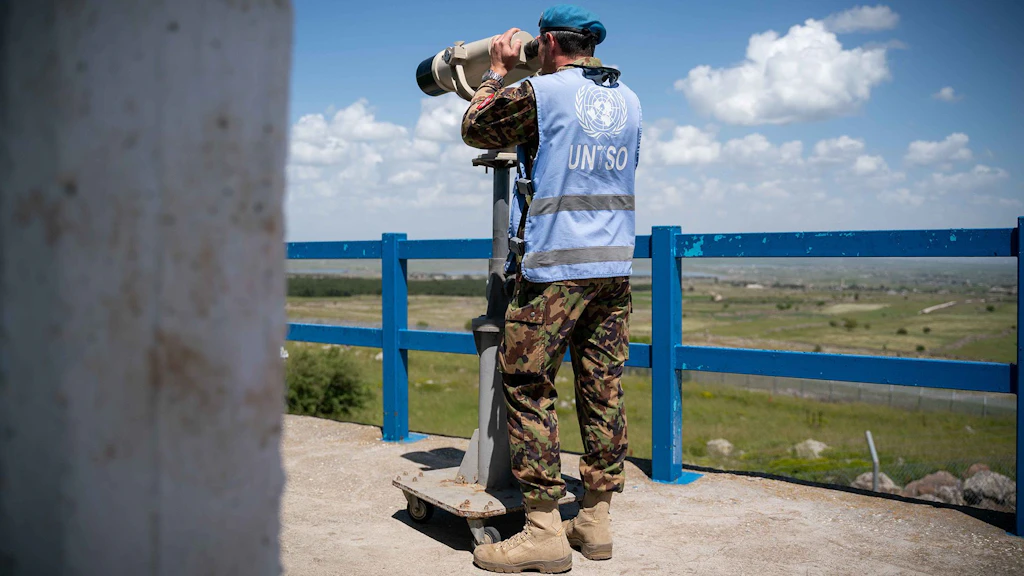
Since 1990, Swiss military observers have been deployed in various regions on behalf of the UN. As a part of international working teams, one of the tasks the military observers perform is to observe and report on the incidents that violate the missions mandates They also patrol areas where operations are carried out in order to monitor sensitive regions and obtain information from the local population relevant for assessing the security situation. Under the mandate, they may also con­duct meetings with the authorities and local armed forces or inspect their troops, weapons and ammunition in order to gain a comprehensive overview of the situation on the ground. Swiss military personnel also participate in various missions as staff officers, performing challenging tasks related to situ­ation assessment, operations, logistics and planning. Swiss military observers and staff officers are deployed in the Middle East, the Democratic Republic of the Congo, South Sudan, Kashmir and the Western Sahara.

14 November 2025

UN

Since 1990, Swiss Officers have supported UN in various mission areas as military observers and staff officers.
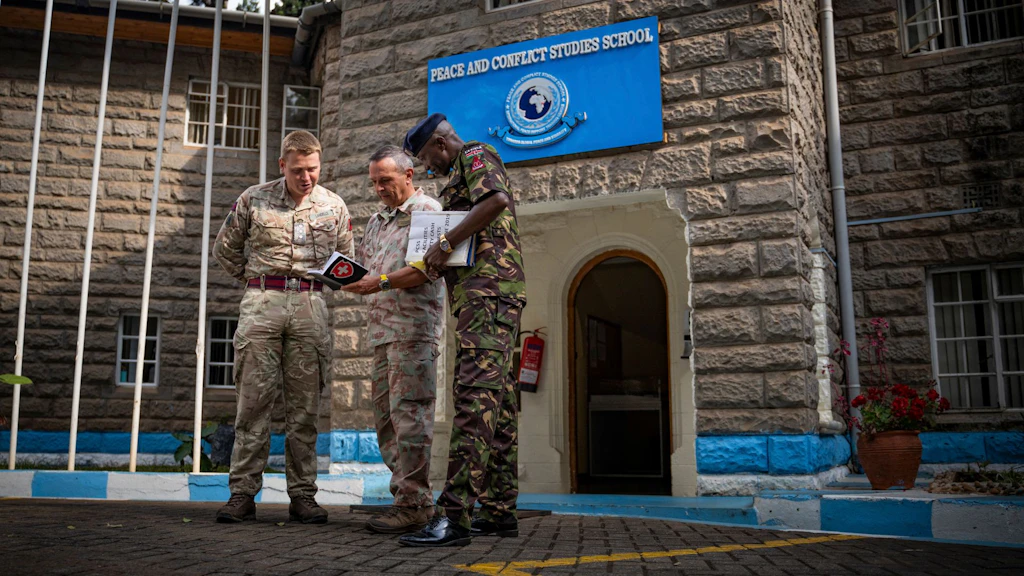
Swiss officers are deployed in the Kofi Annan International Peacekeeping Training Centre (KAIPTC) in Ghana as well as in the International Peace Support Training Centre (IPSTC) in Kenya. Swiss officers support these international training centres in various capacities and contribute to the targeted training of international armed forces, police officers, and civilians in the area of peacekeeping. The subject areas include topics such as mediation, security sector reform, conflict analysis, civil-military cooperation, gender equality, protection of civilians, international law of war, or planning and logistics. Swiss officers undertake planning, organization, coordination tasks, instruct courses, evaluate and analyse course content.

14 November 2025

Capacity building

Swiss officers are deployed in the Kofi Annan International Peacekeeping Training Centre (KAIPTC) in Ghana as well as in the International Peace Support Training Centre (IPSTC) in Kenya. Swiss officers support these international training centres in various capacities and contribute to the targeted training of international armed forces, police officers, and civilians in the area of peacekeeping. The subject areas include topics such as mediation, security sector reform, conflict analysis, civil-military cooperation, gender equality, protection of civilians, international law of war, or planning and logistics. Swiss officers undertake planning, organization, coordination tasks, instruct courses, evaluate and analyse course content.

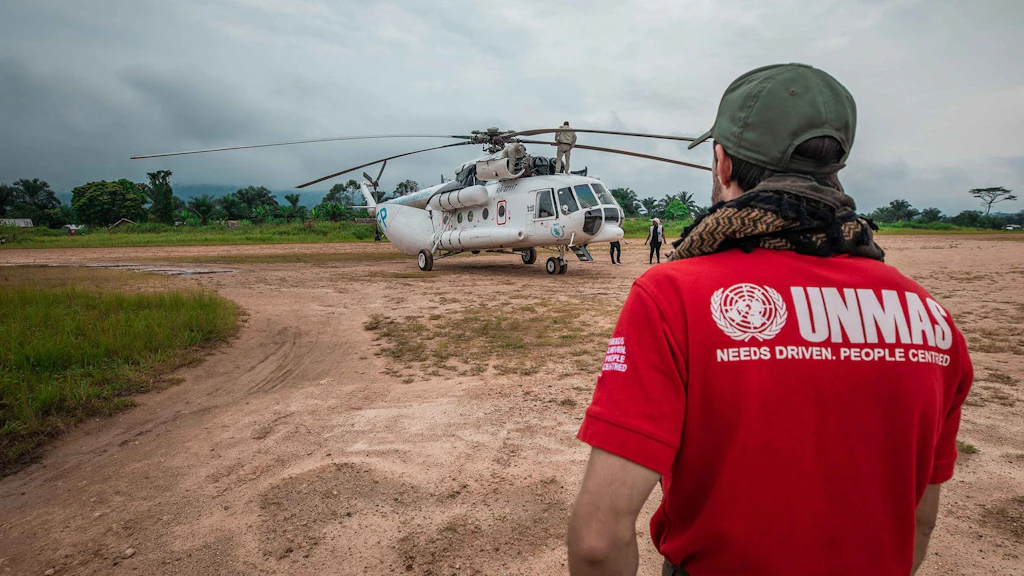
The Swiss Armed Forces are also engaged in mine action oper­ations. They deploy specialists around the world on behalf of the United Nations Mine Action Service (UNMAS), providing expertise in various UN missions, for example in the fields of logistics and information database management. Their tasks include managing and maintaining the equipment of the international demining teams, evaluating data, analysing demined areas and preparing mine maps

14 November 2025

Mine Action

The Swiss Armed Forces are also engaged in mine action oper­ations. They deploy specialists around the world on behalf of the United Nations Mine Action Service (UNMAS), providing expertise in various UN missions, for example in the fields of logistics and information database management. Their tasks include managing and maintaining the equipment of the international demining teams, evaluating data, analysing demined areas and preparing mine maps