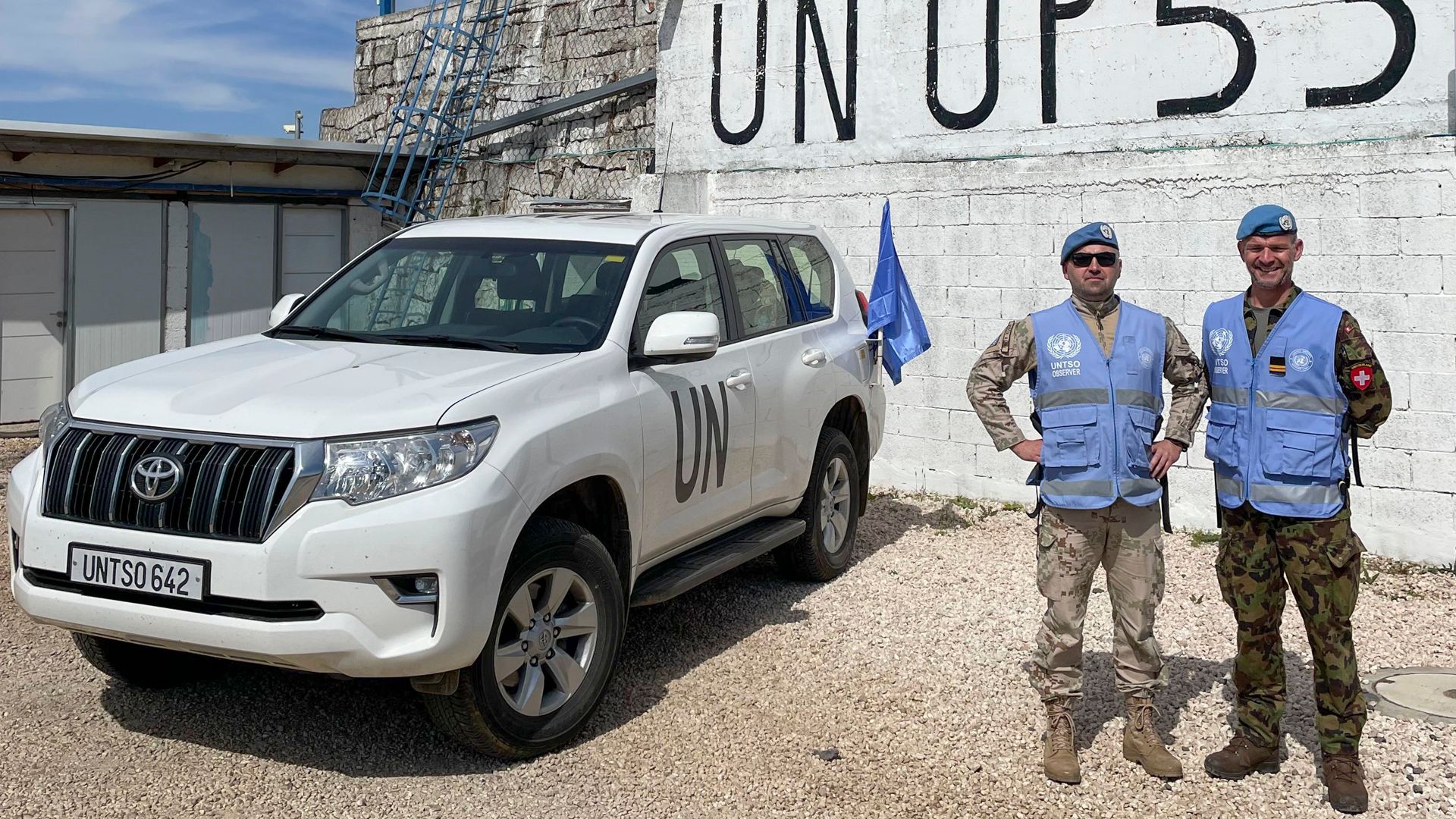
UN mission with the Observer Group Golan in Syria: leadership, decision-making, perseverance
Lieutenant Colonel Thomas Ott is currently serving as Chief Observer Group Golan-Damascus with the United Nations Truce Supervision Organisation (UNTSO), leading a multinational team in the tense border region between Syria and Israel. In this interview, the Swiss officer talks about the current situation, the particular challenges of leading an international team – and why this mission has been so formative for him, both professionally and personally.
Interview by Stefanie Waltenspül, SWISSINT Communications
Lieutenant Colonel Ott, you’re currently deployed in support of UNTSO in Syria. What are your responsibilities as Chief Observer Group Golan-Damascus (COGG-D)?
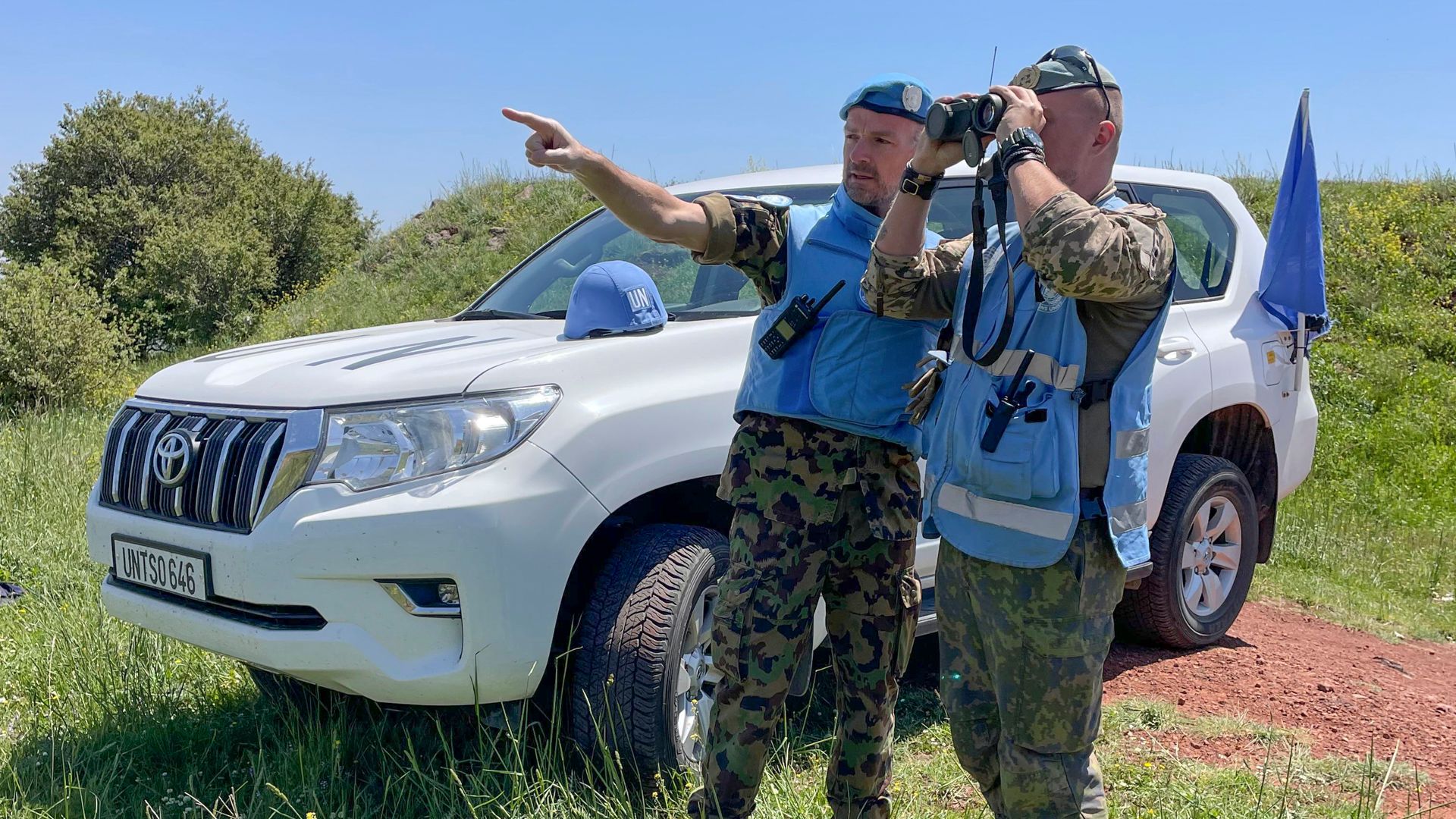
As COGG-D, I’m responsible for leading a multinational team of 38 military observers from 18 different countries, along with around a dozen international and local civilian staff from 5 other nations. My duties include analysing daily reports and updates from the previous 24 hours, conducting and leading daily operational briefings, coordinating operation planning groups, contributing to security-related working groups, and drafting reports for UNTSO headquarters. I'm also responsible for managing personnel and recommending military observers for staff or liaison officer roles. My team includes a deputy, a personnel officer, an operations officer, a training officer, three team leaders and the Chief of Mission Support, all of whom report directly to me.
What does a typical day look like for you?
My day starts at 5.30am with some exercise. Once I'm at work, I go over the latest overnight situation reports, and then prepare and deliver the morning briefing. After that, I either lead or participate in task forces and working groups, plan and coordinate long-term patrols and observation missions, and write reports for UNTSO headquarters.
A significant part of my daily routine involves leading my team, which includes holding performance reviews, providing ongoing mission-related training, fostering team spirit and, crucially, ensuring the team’s ability to maintain operations over time.
In my spare time, which I currently mostly spend inside Camp Faouar, I focus on weight training or playing international football matches against teams from Kazakhstan, Nepal, India, Ghana, and Uruguay. I also read a lot – after six months, I’ve already finished my twenty-third book.
Life in Camp Faouar follows a strict schedule and comes with limitations: thick, fortified walls, barred windows for security, set meal times in the barracks kitchens run by Kazakhstan, and we are constantly guarded by Indian soldiers. Due to the current security situation, activities outside the camp are limited to only the necessary shopping trips in Damascus.
What are your biggest challenges?
The biggest challenge is living and working in the camp, which is very small and offers hardly any privacy. On top of that, there’s the constant threat, which has grown significantly since the regime change in Syria in December 2024. In the wake of that shift, more than 600 airstrikes were carried out near our previous location, destroying the military assets of the former Syrian government. As a result, we had to relocate to the current camp – and since then, the threat level has remained high. Just recently, several heavy airstrikes by fighter jets, accompanied by the sound of drones, took place right near our position during the night.
Another significant challenge is leading a multinational team with diverse cultural backgrounds, languages, and military training. It’s a challenge to keep operations running smoothly in this kind of environment. We must always ensure that observation posts are fully staffed, and that daily patrols, inspections and verifications are carried out together, which is particularly challenging in such a volatile environment.
What were your first impressions on arriving in the region?
My first impressions were shaped by the regime change on 8 December last year and Israel's massive military response on the Golan. I was also struck by the tense security situation, the high level of operational readiness within the multinational team and the remarkable cultural diversity. What impressed me most was how professional and dedicated the military observers are, even under such difficult conditions.
How were you trained for your deployment? What experience did you bring with you?
Officer training provided me with a solid foundation in structured thinking. Commander training and large-scale exercises – with Mechanised Brigade 11 and Territorial Division 4, in my case – also prepared me well for this role. The training I received is on a par with that of professional armies. Before deployment, I underwent intensive, mission-specific training and was fully equipped. I also completed additional driver training for lightly armoured vehicles.
In my role as Head of Operations/Planning at SWISSINT, I had already gained experience in multinational cooperation, crisis management and operational leadership. Previous deployments with the UN and NATO, along with leadership experience at staff and battalion level, helped me to quickly find my feet in the complex situation on the ground and deliver from day one.
Has your deployment added value to your professional career or personal development?
Absolutely. Leading a multinational team on a daily basis and working in a VUCA environment – one shaped by volatility, uncertainty, complexity and ambiguity – has helped me to develop my leadership skills and intercultural competence. Following the regime change in Syria, there was a period during which law and order completely broke down. It was a highly volatile situation that involved fighting, airstrikes and looting. We were directly affected by these events, and dealing with such extreme situations was both demanding and instructive. This deployment is also an important step in my career – an investment that prepares me for future roles within SWISSINT, other parts of the Swiss Armed Forces, or even at UN headquarters in New York.
Has there been a defining moment or highlight during your time on the job so far?
One particularly formative experience was relocating to Camp Faouar during the regime change. I was deeply impressed by how professionally and calmly my team responded to this extreme situation. It showed me just how important planning, team spirit, operational leadership, and after action reviews – including the immediate implementation of lessons learned – are in the field.
What motivated you to take on this military peacebuilding mission?
As Head of Operations/Planning at SWISSINT, I believe that leading by example and taking responsibility in challenging environments is important. I’m motivated by the opportunity to contribute to the safety of the local population on a daily basis, while also acquiring knowledge and experience that I can pass on to the Swiss Armed Forces, particularly in the area of military engineering.
Who would you recommend this kind of assignment to, and why?
I would recommend it to all officers and to anyone who wants to develop their leadership skills in an international and demanding environment, who is ready to take on responsibility and perform consistently under pressure. This kind of deployment offers enormous personal and professional development, contributes directly to peace and security in the region, and provides a clear return on investment for Switzerland and for the Swiss Armed Forces.