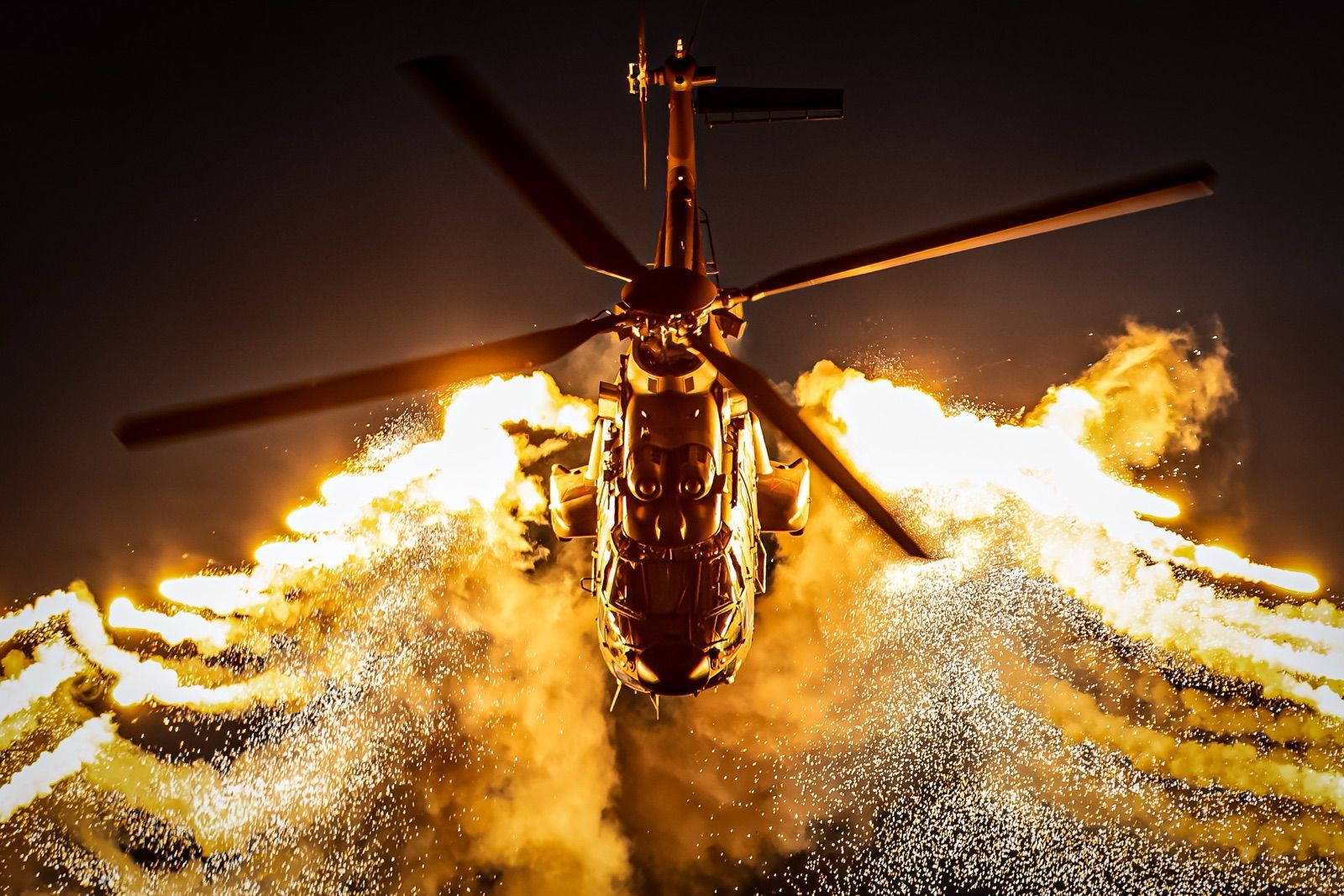
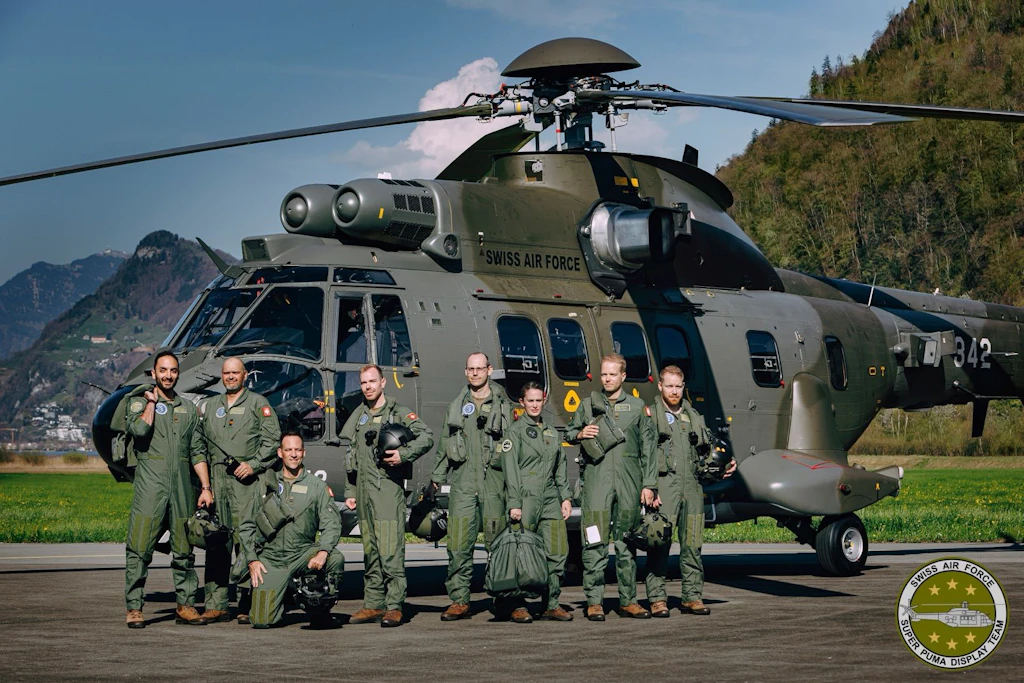
Displays offer an opportunity for our highly trained pilots to show their skills, and some of the capabilities of the versatile Super Puma and Cougar helicopters, which the air force uses for daily operations. The eight-minute display can be varied to suit the venue's local geographical and meteorological conditions.
By landing at the display venue, the pilots can have personal contact with the spectators as they can present and explain their machines at air bases and other locations before and after their performances.
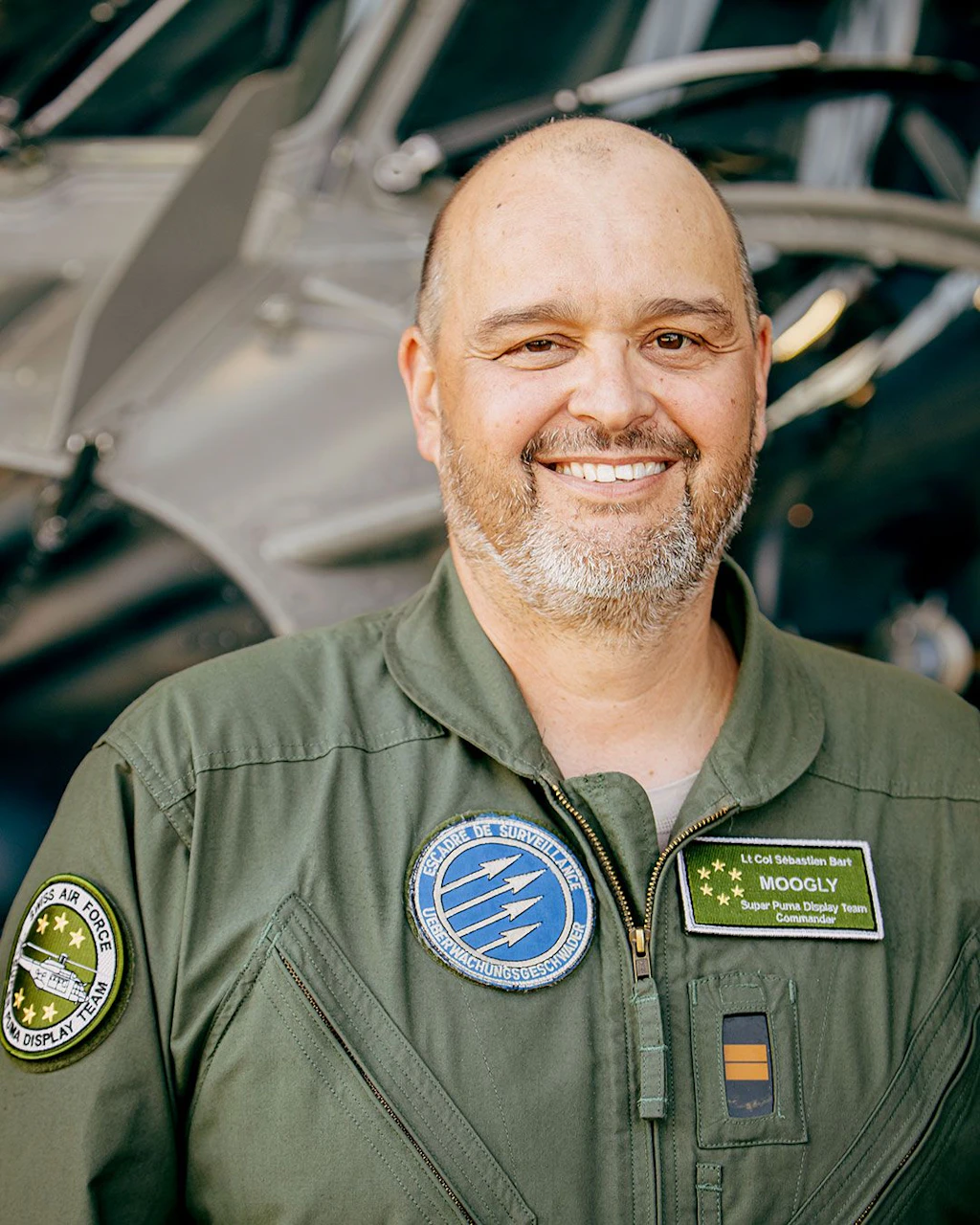
Moogly was an active Super Puma Display pilot from 2005 to 2014.
In 1995 he graduated as a military pilot flying the Alouette III and afterwards completed the BMPS (professional military pilot school).
To date he has 8500 hours of flying experience with transport aircrafts and helicopters.
He is stationed in Payerne and work mainly as Chief Flight Operations.
He is an active flight instructor on the Super Puma and on the Pilatus Porter
The Team
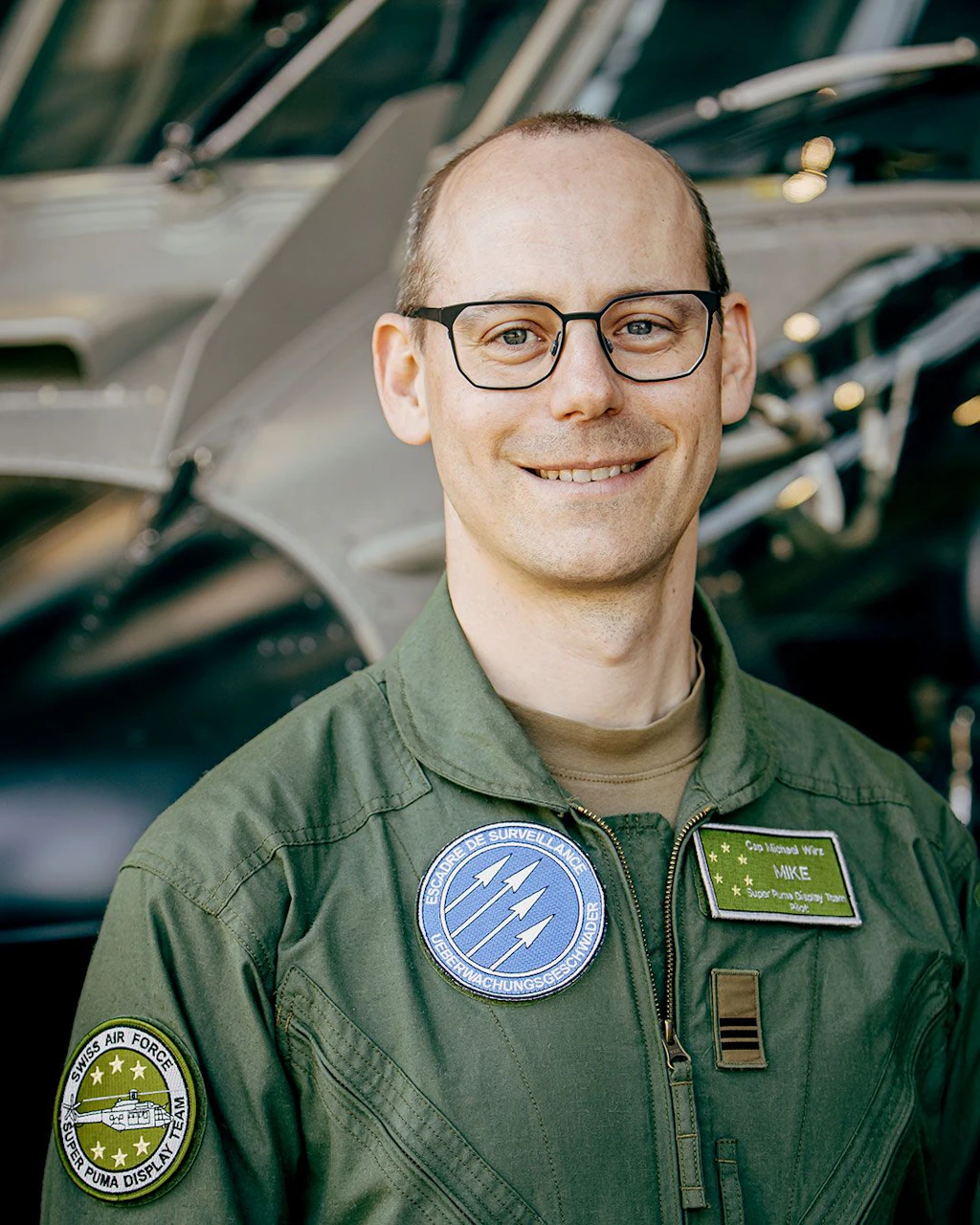
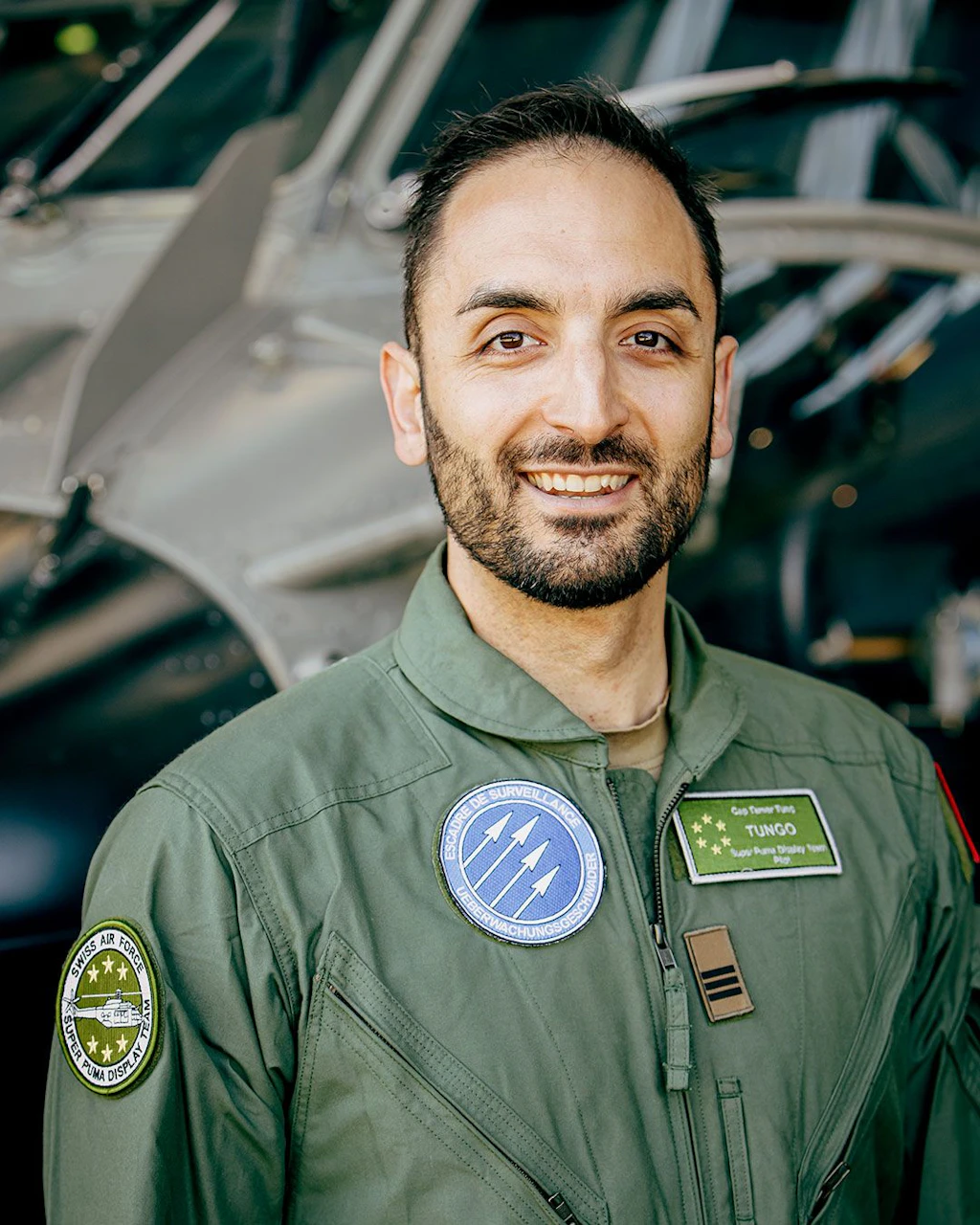
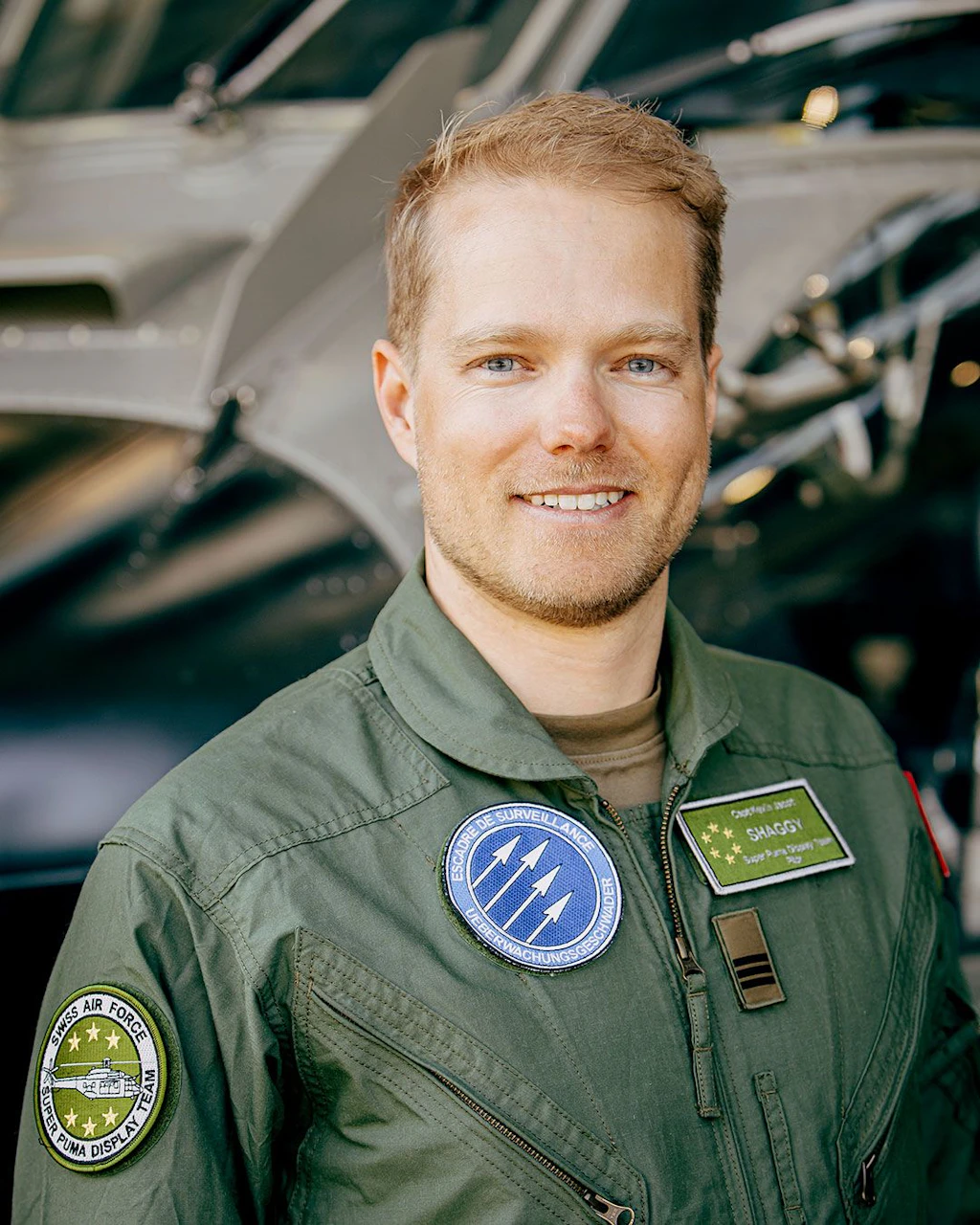
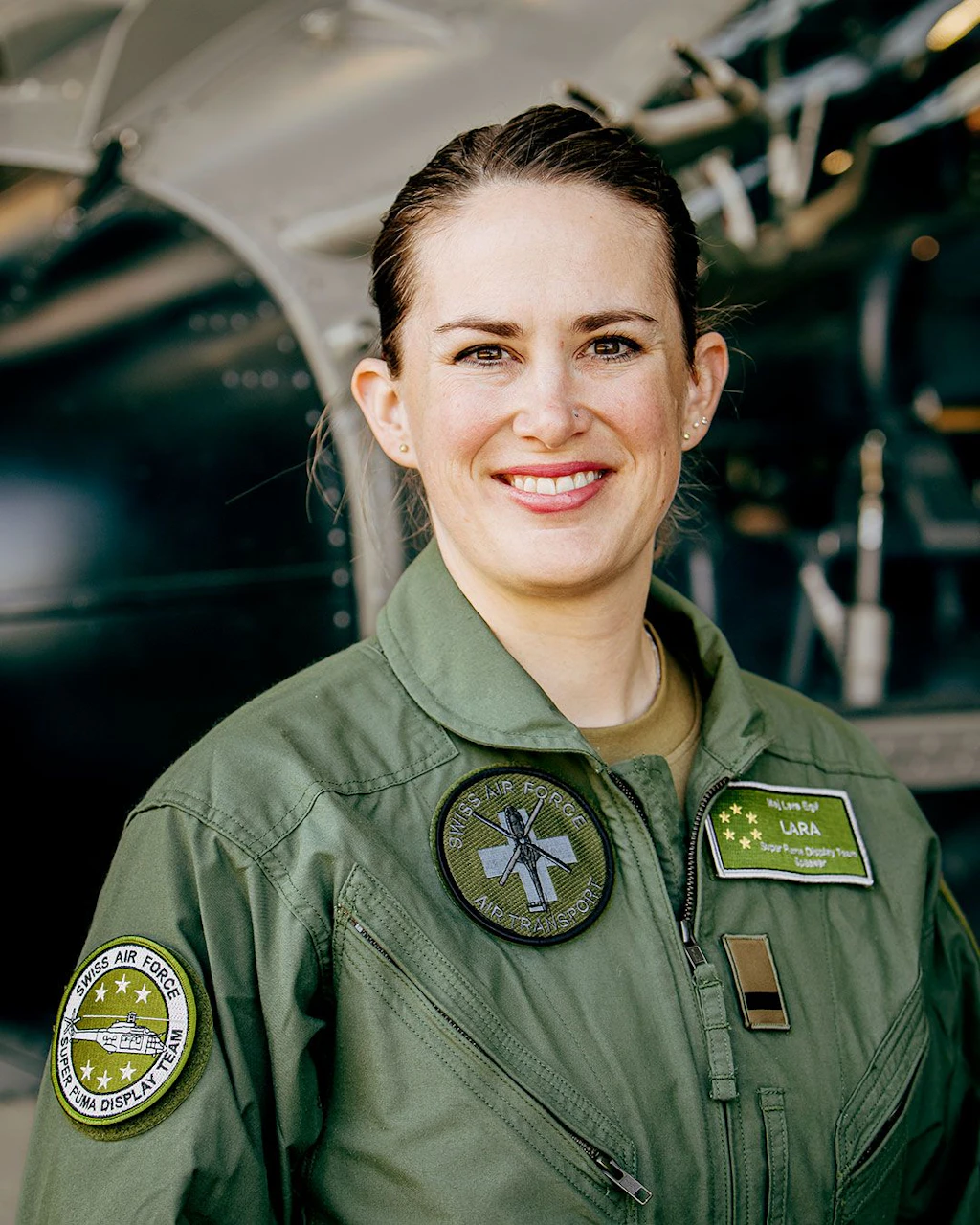
The Super Puma Display Team Pilots
All Super Puma Display Team pilots are working pilots and flight instructors from the air force professional aviator corps who are familiar with the helicopters' entire range of operations. The machines are flown by two pilots in training sessions and display performances: the captain focuses fully on flying the show programme as precisely as possible, while the co-pilot monitors the systems and is responsible for the radio communication.
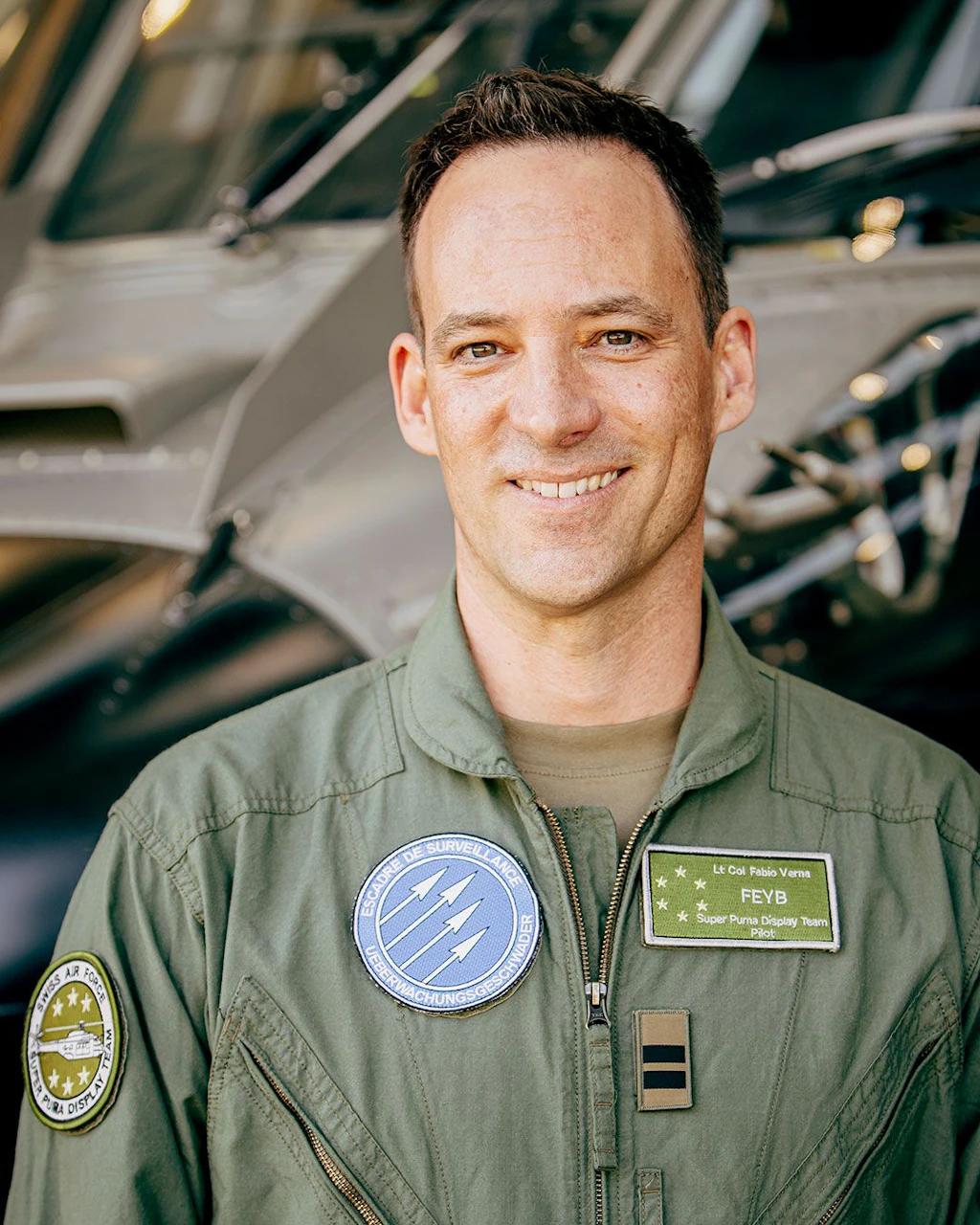
He graduated as a military pilot in 2001, flying the Alouette III, and afterwards underwent professional military pilot training from 2001 to 2004. He then worked as an Alouette III and PC-7 pilot and flying instructor, and was later trained on Super Puma and EC635 helicopters.
Since 2022, Feyb has been assigned to Air Transport Wing 3 and leads it as its squadron commander.
He has a total of 6,300 hours of flying experience on PC-7 and PC-6 aircraft as well as on Alouette III, EC635 and Super Puma helicopters.
Feyb flies missions in Switzerland and abroad and is an EC635 flight instructor.
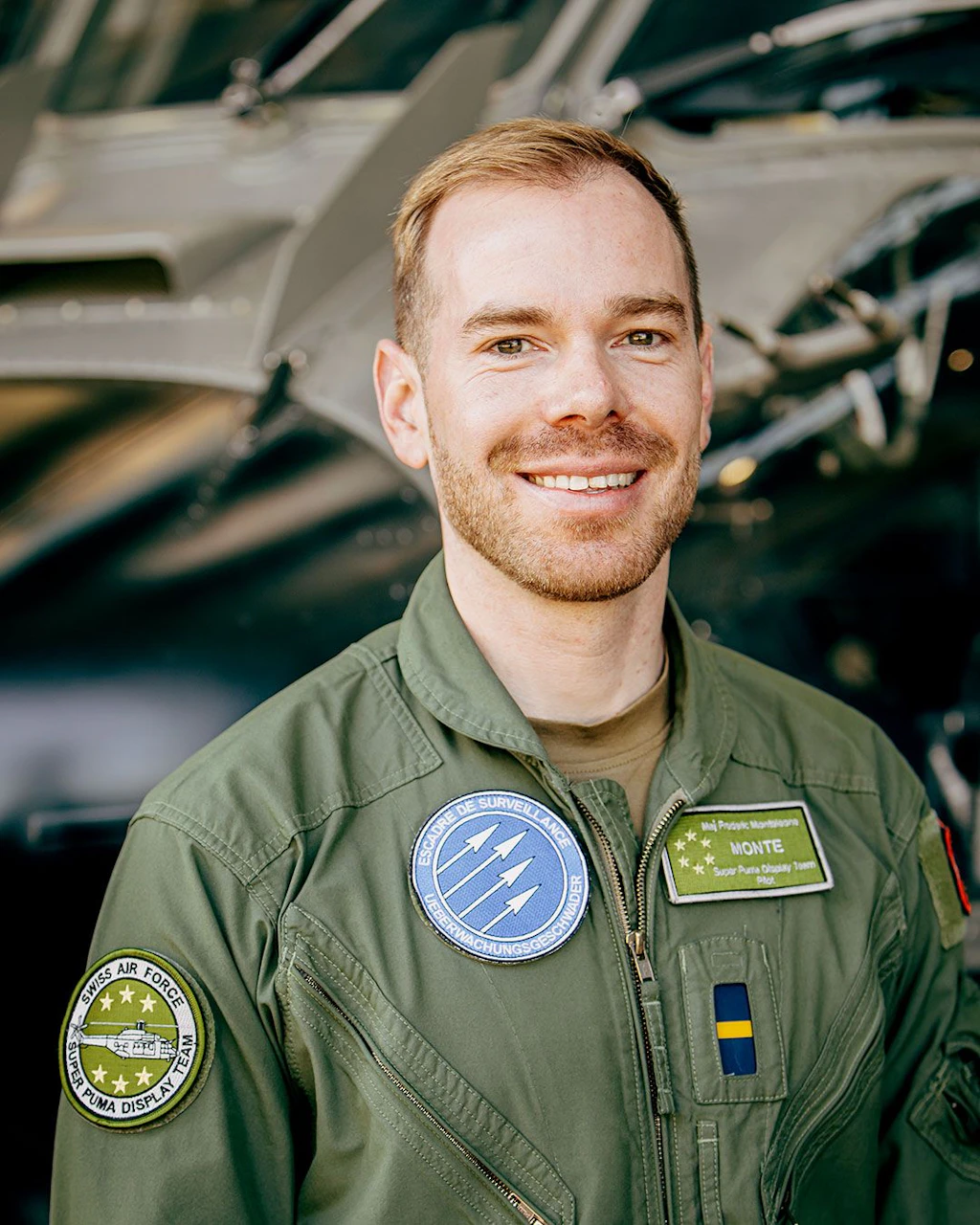
He was certified as a professional military pilot on Alouette III in 2008 and assigned to Payerne.
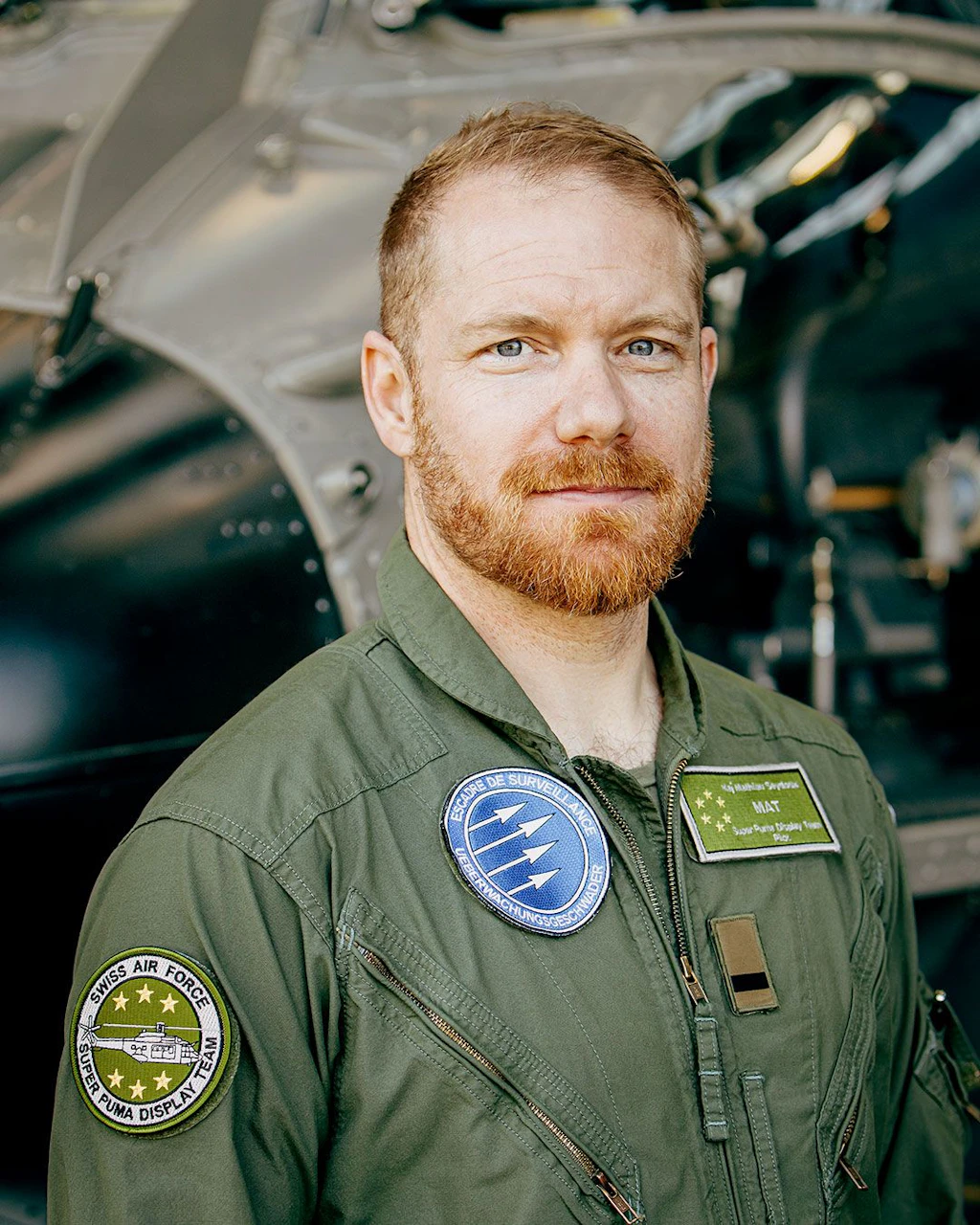
He was then deployed as a mission pilot on Alouette III, PC7, PC6 and later on Super Puma and EC635.As an operational pilot, Mat flies missions at home and abroad and is a flight instructor and examiner on EC635 and Super Puma.
His flight experience on helicopters and aircraft amounts to around 5,900 hours.
He was certified as a military pilot on EC635 in December 2016 and flies in the Flight 8 in Alpnach.
He flies Super Puma, PC6 and EC635 as an operational pilot in the Professional Flying Corps. On both helicopter he is flight instructor and serves as chief pilot on EC635.
His flight experience on helicopters amounts to approx. 3,500 flight hours.
Shaggy joined the Display Team in 2025 as a co-pilot. This year is going to his first season as pilot in command
He qualified as a military pilot on the EC635 in December 2017 and has been flying in Alpnach. He works for the Swiss Air Force Pilot School 85 as CTKI (Chief Theoretical Knowledge Instructor).
As an operational pilot in the professional aviators corps, he flies the Super Puma and EC635 and is flight instructor on both helicopter types.
His total flying experience amounts approx. 3100 flight hours
Lara has been a permanent member of the display team since 2025.
She supports the team as a speaker during display and in general PR matters.
As chief of staff and deputy commander of Emmen Air Base, as well as due to her serving as officer in the Swiss Armed Forces, she has she has many years of experience in the Swiss Air Force.
Manoeuvres
The aerobatic display features individual manoeuvres, and can be adapted to the venue's geographical and meteorological conditions.
If you would like to see the individual manoeuvres in 3D animation, we recommend the «Super Puma Air Display» DVD, which can be viewed and ordered at video portal ECM.
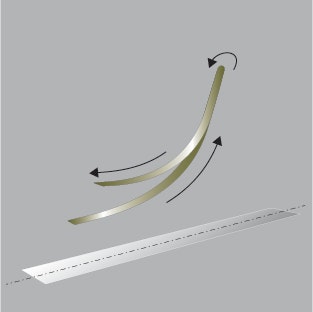
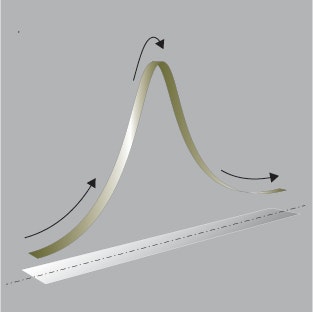
From horizontal flight at maximum speed, the helicopter is pulled up in a vertical climb pointing straight up. Shortly before stalling, the pilot uses the tail rotor to rotate the aircraft to the left or the right. Precise rotation on the spot leaves the helicopter pointing straight down, and from where it continues back down to the presentation axis along exactly the same line it came from.
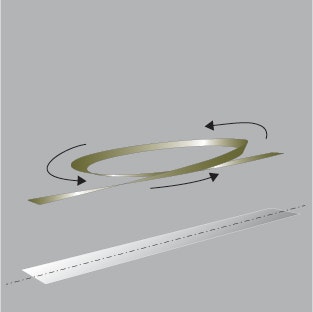
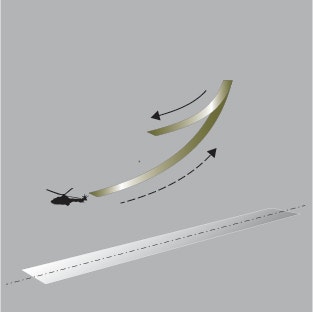
This very tight turn, flown horizontally at maximum speed, is a defence manoeuvre in tactical flying. The goal is to fly a full circle as tightly as possible, while always being aware of the enormous aerodynamic force that is being applied to the rotor.
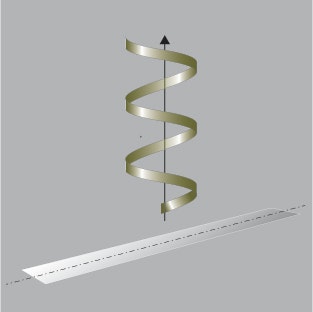
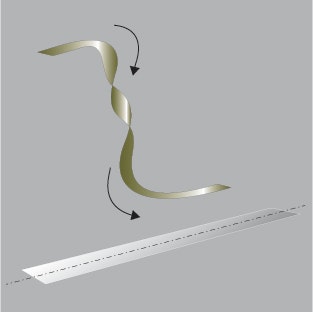
From hover flight, the helicopter climbs in a «corkscrew» motion. Increasing the power is enough to bring the machine into a quick counter-clockwise rotation. After about three rotations, the lift-like climb is stopped and from the hovering position brought to a vertical descent in order to reduce altitude as rapidly as possible.
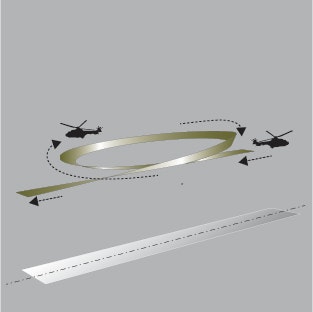
This manoeuvre is extremely challenging, even though it is the slowest; just a little too much speed or too much wind blowing from the wrong side, or the slightest imprecision in steering can ruin a nice circle!
In level flight, the helicopter accelerates backwards to reach about 100km/h. The momentum is then converted into an ascent until the helicopter nose ends up facing vertically down.
And before continuing - a short moment of hovering.
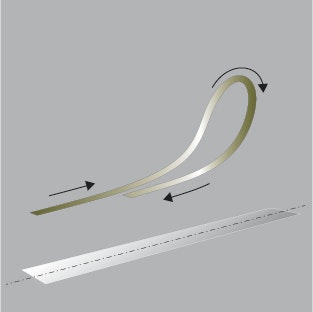
The pilots pull the helicopter upwards at a steep angle, make a turn while leaning the helicopter back slightly, and then continue their flight in a similar direction. To you as a spectator, the helicopter appears to be flying a loop – and exactly this is the goal of this manoeuvre.
What follows is an elegant, climbing turn that is initiated at maximum speed. At the culmination point, the helicopter will even start to turn upside-down – i.e. it banks at an angle of over 90°!
As soon as the helicopter is stationary, it is placed on its nose and guided in a steep spiral towards the ground.
Initiated like the Hammerhead manoeuvre, the helicopter begins by climbing into the sky. Shortly before stalling, it is brought to the position with the nose pointing down and a steep descent is initiated.
Frequently asked questions
If you want to become a display pilot, you need several years of experience as a Super Puma PIC (Pilot in Command). You then prepare for the specific challenges of display flying by attending special training courses. Usually, the team consists of the commander and six display pilots.
And how can I become an Air Force pilot? This information is available at:
The co-pilot or «assisting pilot» must be a display pilot as well and his job is, as the name suggests, to assist the captain, the «pilot flying». On command, he lowers the landing gear, for example, and reports current engine data, flight altitude and speed to the pilot flying. He is also responsible for radio communication with air traffic control.
The Super Puma weighs 5,350 kg when empty (without load, fuel or pilots). Its maximum take-off weight is 9,000 kg (or 9,350 kg, when carrying an exterior load).
As you see, we have to balance the weight distribution between passengers, load and fuel so that it falls within a certain range. If I want to carry a load of 2.5 tons, for example, I first consult the capacity charts: What are the current air pressure and temperature? The wind conditions? What is the altitude of the loading or unloading site (air density decreases the higher up we go)? What is the flight distance and how long will it take?
Passengers need a special authorisation, which is only granted if the task requires their transport by helicopter, e.g. as SAC (Swiss Alpine Club) rescue staff responding to an avalanche accident.
Rotor diameter: 15.6 m Length (1 main rotor blade in front): 18.7 m Height (1 tail rotor blade vertically up): 5 m Undercarriage: 3 x 5.3 m
No. The Super Puma is fitted with state-of-the-art equipment that allows flying by day and night and in all weather conditions. Its cockpit equipment is almost equal to any modern airliner, it even includes an autopilot that supports the pilots during long flights in the clouds. At night, the pilots wear night vision goggles.
All this allows the Super Puma to carry out any mission just about ‘round the clock.
There are many reasons. The helicopter has two turbines, which are started one after the other. From the outside it looks like the helicopter could lift off using the first turbine but the second turbine needs to be started first as well. Then the data can be entered into the navigation computers, which takes longer or shorter depending on the mission type. Some checks can or should be performed only after the starting procedure has been completed. Therefore it always takes five to ten minutes from the time the rotor blade begins rotating for the first time to lift off. And sometimes we have to wait for quite some time until we receive clearance from traffic control to roll out or take-off.
It used to be easier to distinguish between the two helicopters. In 2014, however, the Super Puma fleet upgrade was completed, i.e., the cockpit and the navigation devices were brought to state-of-the-art technology standard.
Since then, the interior of the Cougar and the Super Puma has become very similar: both have a glass cockpit and an abundance of monitors!
But from the outside it is difficult to distinguish them as in fact they are the same helicopters. The turbines and the cabin are the same and the construction is practically identical. Nevertheless, the attentive observer can make out this or that detail: The air inlets of the Super Puma’s turbines for example, are all fitted with sand filters – but then, this goes for some of the Cougars as well... The only sure thing you can say: if the inlet grill is of silver colour, it is certainly a Cougar! And if we look up close, we can see that the number and layout of the antennas are different as well.
Would you like to request the Super Puma Display at your event?
The Swiss Air Force display teams take part in many displays and flypasts each year. On this page, you will find all the information you need in order to request a Patrouille Suisse, PC-7 TEAM, Super Puma Display Team, F/A-18 Hornet solo display or a parascouts performance during your event.