Digital and practical: New approaches to training peacekeepers
The SWISSINT Training Centre runs internationally recognised courses for prospective UN military observers and staff officers. The courses not only cover specialist military knowledge, but also prepare participants for specific operations in multinational, politically sensitive and dynamic conflict environments. To ensure that future peacekeepers are as ready as possible for the diverse demands of today’s UN missions, Switzerland focuses on specialised and practical training.
Text Aisha Seitz, Communications Officer, SWISSINT Reserve Staff
Today, peacekeeping missions encompass a wide range of tasks, from monitoring and assessing the situation, through protecting the civilian population, to supporting political processes and reforms in the security sector. New forms of conflict, hybrid threats, cyber risks and disinformation are rapidly changing the landscape. The SWISSINT Training Centre offers two courses – the Swiss United Nations Military Observer Course (SUNMOC) and the Swiss United Nations Staff Officer Course (SUNSOC), each designed to provide specific preparation for these complex operational environments. Both courses are certified by the United Nations Department for Peace Operations (UNDPO) and not only have a very strong practical focus, but are also based on digital learning methods, modern simulations, modular knowledge transfer and a rapid ‘lessons learnt’ cycle. A team of international instructors continually incorporates experiences from current operations into the training programme in order to further enhance its quality and realism.
From traditional classroom teaching to a digital learning pathway
In addition to the content, which must be regularly adapted to the rapidly changing operational environment, teaching methods are also constantly evolving. Already, every person deployed on a UN mission works through the Core Pre-deployment Training Materials (CPTM) and is subsequently awarded a certificate. Topics covered include the UN’s mandate and structure, as well as codes of conduct that apply during missions, human rights and self-protection.
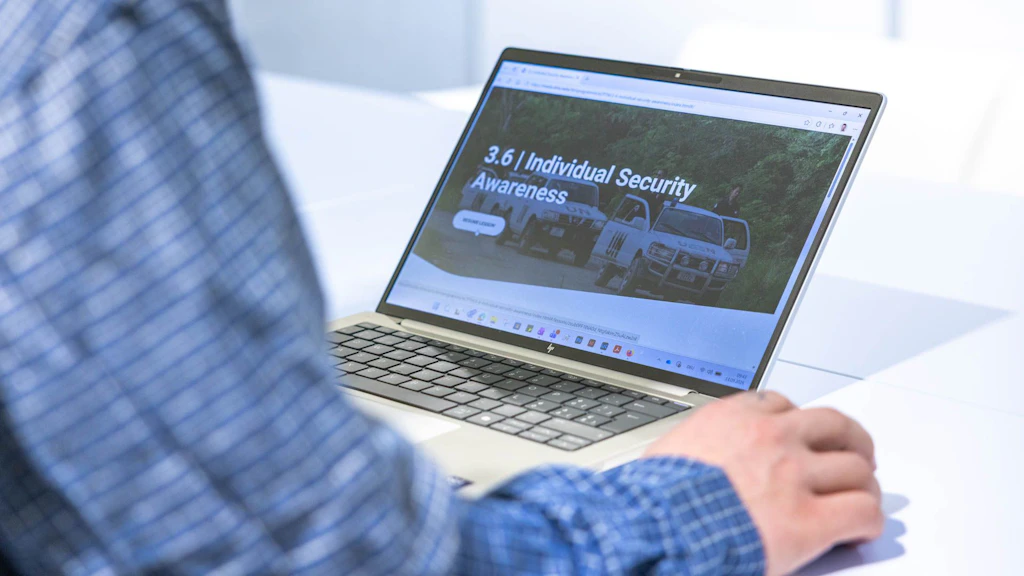
Switzerland supports the UN in constantly updating training programmes. As a specific contribution to this, it is running a project with the United Nations Integrated Training Services (UN ITS) to digitise the CPTM documents. The aim is to raise the standard of education and ease the burden on the training centres by offering students personalised learning opportunities. The lessons are to be made available on the UN’s learning management system by the end of 2026. Until now, the course material has mainly been taught through PowerPoint presentations in traditional classroom-based lessons. The transition to and revision of the so-called eCPTM took place in close consultation between the UN, SWISSINT and the Defence International Relations Division.
A beta version of the eCPTM was in use at SUNMOC 2026. The content is presented in an interactive format and is supplemented with videos, audio and visualisations. Assessments and case studies round off the programme. From now on, SUNMOC participants must complete all 30 lessons through self-study before the course begins and must pass an entrance test. This ensures that all participants have the same basic knowledge by the start of the course. Another advantage is that everyone can acquire the knowledge they need at their own pace.
Practical, in-depth learning on site
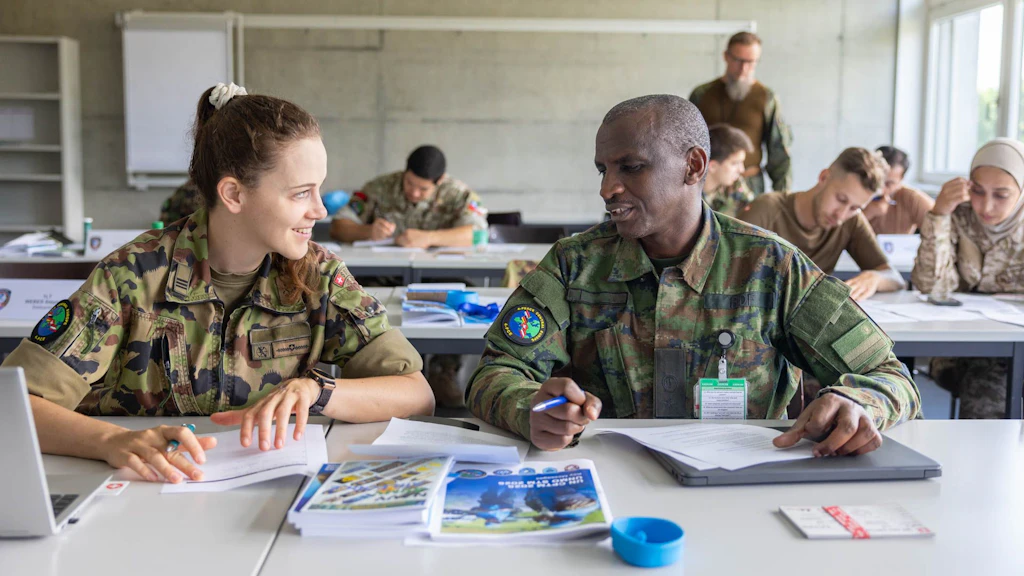
During the workshops, what has been learnt is discussed and explored in greater depth at the Training Centre. As part of this, the trainee peacekeepers work on various case studies and prepare their own presentations on selected topics. Initial feedback has been positive, and participants and instructors alike agree: there is more interaction, which builds on shared knowledge and allows more time for in-depth discussion.
The requirements for instructors are also changing. Although many traditional lectures have been dispensed with, working through the topics in a group still takes a lot of time and effort. Realistic scenarios and simulations complement the theoretical training and revisit the topics covered in the self-study section. The scenarios reflect real-world challenges encountered during operations, including asymmetric threats, information management and cooperation with civilian actors.
Swiss expertise with a global impact
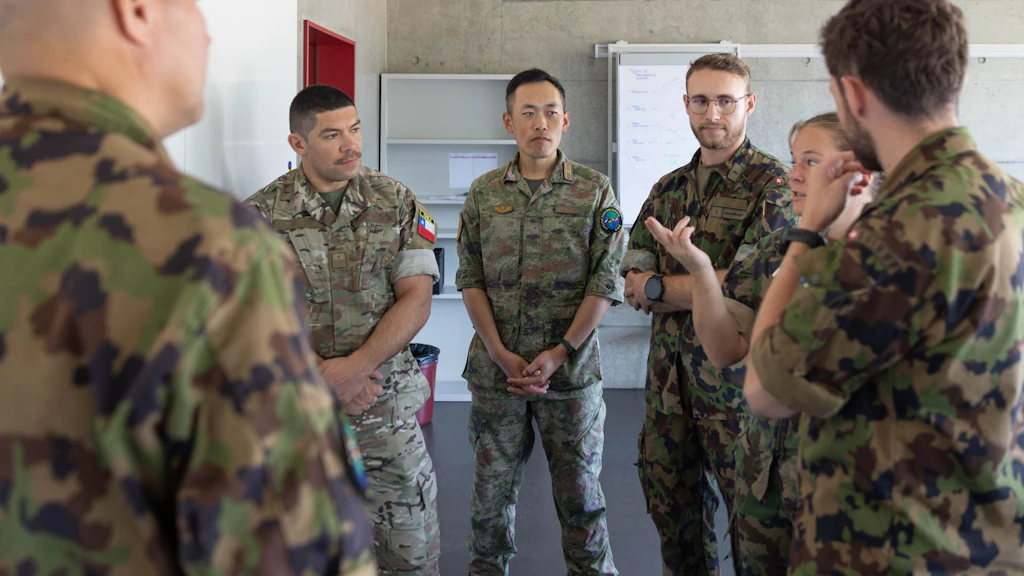
The SWISSINT Training Centre works closely with international partners, such as Germany, Austria and the Netherlands, as part of the ‘4PCE – Fo(u)r Peace Central Europe’ initiative. The aim of this partnership is to jointly develop and refine training programmes, capabilities and operational standards in the field of military peacekeeping. The opportunity to pool expertise and resources creates added value for all the nations involved. The joint final exercise organised by SUNMOC with its partner courses in Germany and Austria demonstrates how effectively coordinated procedures, common standards and well-established communication work in a multinational environment.
Through the new eCPTM, Switzerland is providing the UN with learning materials that are used worldwide so as to offer the best possible training, tailored to the complex realities of operational deployment, in which military, political and humanitarian dimensions are closely intertwined. In doing so, it makes an important contribution to strengthening international security and stability. Peacekeeping.