
Augustin Keller (1754 – 1799!)
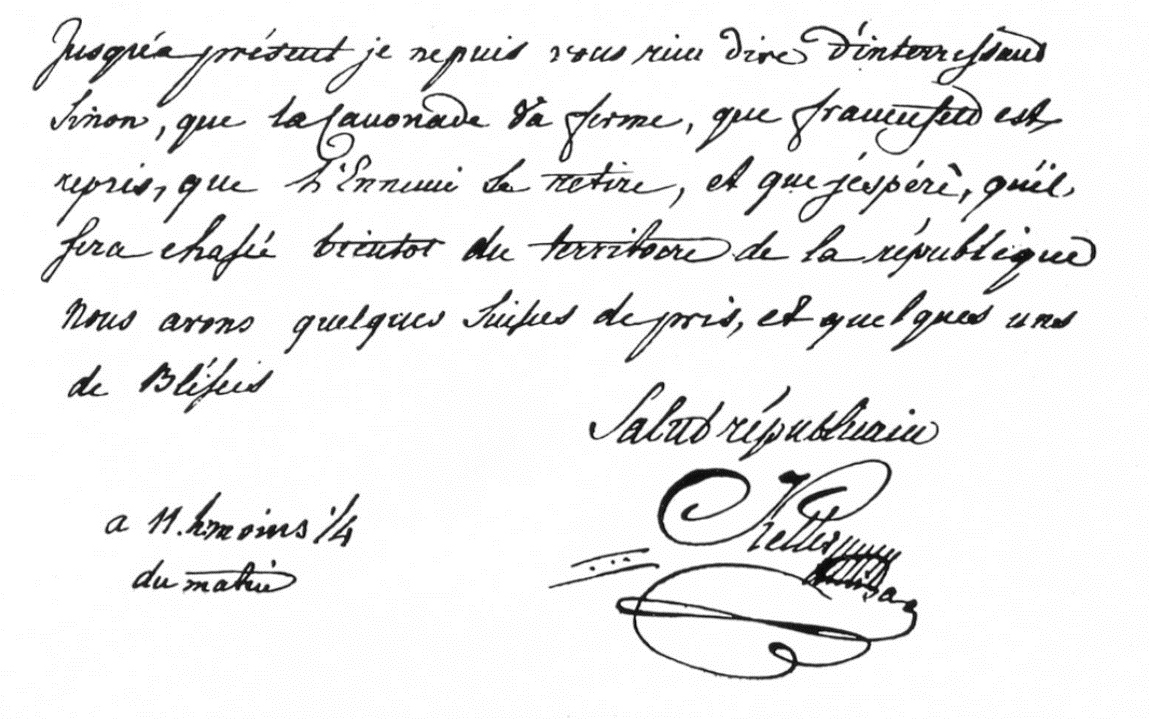
On 28 March 1799, in the midst of a period of upheaval the commander of the Helvetic Legion, Colonel Augustin Keller, was promoted to brigadier general and appointed commander-in-chief of the Helvetic Republic's army. However, the hurriedly assembled troops proved completely incapable of fighting a battle. Augustin Keller was released from his duties on 24 May 1799 due to failure and the militia army was disbanded on 12 August of the same year.
Augustin Keller was born in Solothurn on 22 August 1754. After studying at the Jesuit school in Solothurn (1766-1770), he enlisted in a regiment in the service of France. He first served as an NCO and thanks to his zeal was soon promoted to officer. In 1798, he took over the local command of Bruges, where he stood out for his courage in defending the city. Meanwhile, supported by France and its French troops, the Helvetic Revolution had broken out. On 12 April 1798, the new Constitution came into force and the old Confederation was replaced by the Helvetic Republic, a sister republic – in reality a satellite state - of France. On 19 August, an offensive and defensive alliance was signed, which put an end to the war with France, and the Helvetic Republic lost its independence in foreign policy affairs and its neutrality.
On 27 August 1798, Augustin Keller was appointed Helvetic minister of war but did not take office because of the veto of the French Directorate. The Helvetic Republic's dependence on France sparked new protests that were stifled in blood by French troops. In their attempt to maintain order the central authorities pushed ahead with the establishment of a military organisation, and on 4 September, decided to form the Helvetic Legion, a permanent intervention force of 1,500 men serving on a voluntary basis for the protection of internal order. Colonel Augustin Keller, who was entrusted with organising the legion, was appointed their commander in September 1798.
On 13 December 1798, the act on the organisation of military conscription for the purpose of creating a Helvetic army came into force. Because of the unstable political situation throughout Europe acting quickly became crucial. On 24 February 1799, when a conflict with the allied powers seemed inevitable, the government mobilised 20,000 men to defend the borders. Four days later a general staff was created and on 28 March Augustin Keller was appointed general.
As his failures led the Directorate to relieve him of his duties on 24 May 1799, Augustin Keller fled to Paris and was convicted by a court martial on 24 July 1799. That was the last time he was mentioned in historical documents. It is believed that he served under the French colours again and probably ended his career as captain in Batavia, present-day Jakarta.